


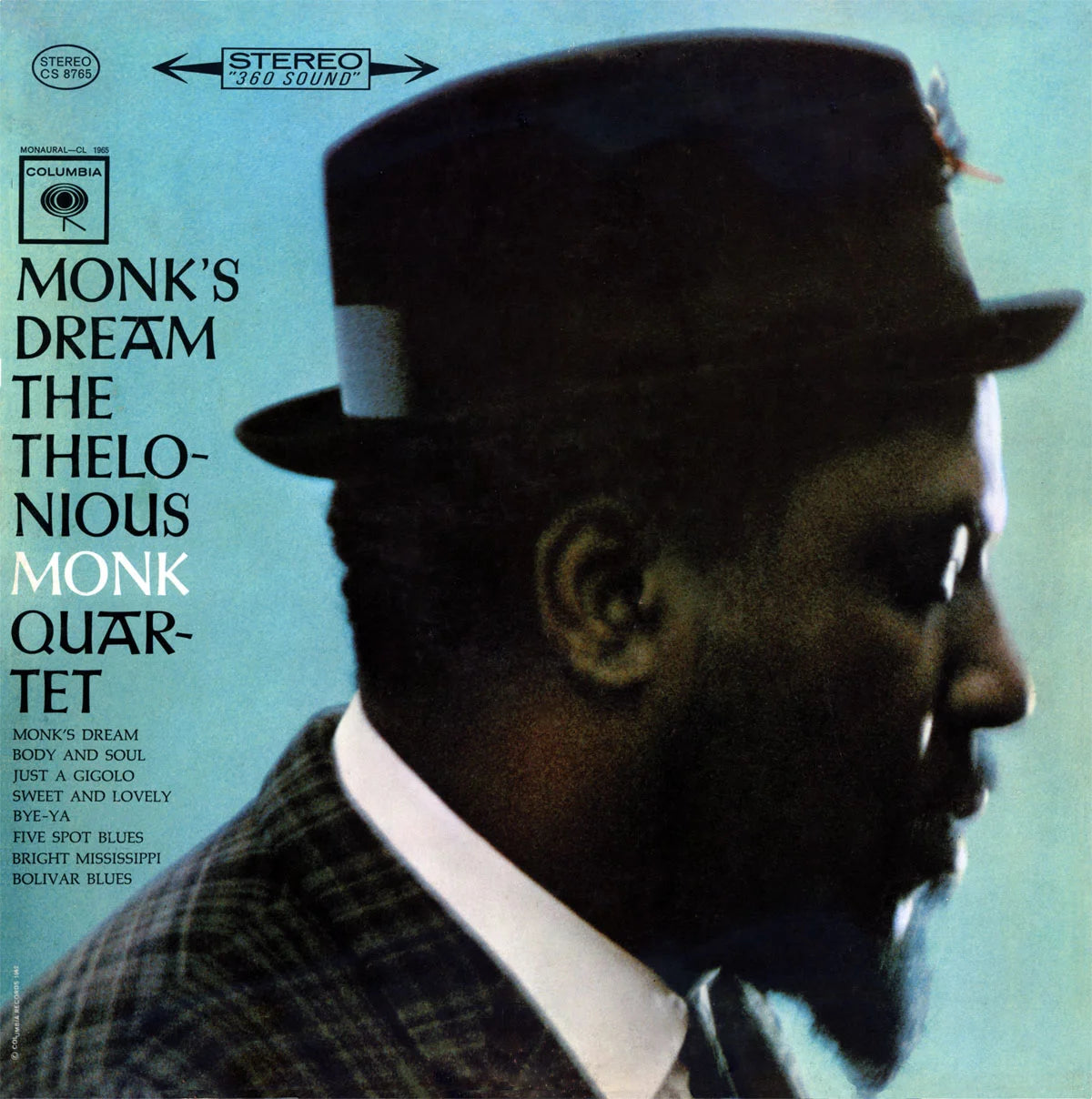
The Thelonious Monk Quartet Monk's Dream (IMPEX Audiophile Reissue)
-
Regular price
-
$80.00 SGD
-
Regular price
-
-
Sale price
-
$80.00 SGD
- Unit price
-
per
Couldn't load pickup availability
About
— The Analog Vault // Essential Listening —
Though highly regarded by his peers, commercial success eluded Thelonious Monk for the first three decades of his career. It wasn’t until his Columbia Records debut in 1963, that the American jazz pianist finally broke through with his best-selling album, Monk’s Dream. While his dissonant and angular approach to the piano was previously dismissed as too difficult, perhaps Monk was simply too far ahead of the curve.
With this album, the exhilarating and unorthodox freedom Monk conveys was properly embraced in the post-bop era. Accompanied by bassist John Ore, saxophonist Charlie Rouse and drummer Frankie Dunlop, Monk’s Dream came true - realised by the vision, aptitude and immaculate craftsmanship he displays on iconic tracks such as "Just a Gigolo" and "Bolivar Blues”, among others. — The Analog Vault
—
Monk's Dream is the Columbia Records debut release featuring the Thelonious Monk Quartet: Monk (piano), Charlie Rouse (tenor sax), John Ore (bass), and Frankie Dunlop (drums). Jazz scholars and enthusiasts alike also heralded this combo as the best Monk had been involved with for several years. Although he would perform and record supported by various other musicians, the tight -- almost telepathic -- dimensions that these four shared has rarely been equalled in any genre.
By the early '60s, bop had become considered passé by artists as well as fans looking for the next musical trend. This is coupled with the fact that discerning Monk fans would have undoubtedly recognized many of these titles from several live recordings issued at the end of his tenure on Riverside.
Not to belabor the point, however, but precious few musicians understood the layer upon layer of complexities and challenges that Monk's music created. On tracks such as "Five Spot Blues" and "Bolivar Blues," Rouse and Dunlop demonstrate their uncanny abilities by squeezing in well-placed instrumental fills, while never getting hit by the unpredictable rhythmic frisbees being tossed about by Monk.
Augmenting the six quartet recordings are two solo sides: "Just a Gigolo" and "Body and Soul." Most notable about Monk's solo work is how much he retained the same extreme level of intuition throughout the nearly two decades that separate these recordings from his initial renderings in the late '40s. Monk's Dream is recommended, with something for every degree of Monk enthusiast. — (via AllMusic)
—
"Monk's Dream" IMPEX Reissue Makes The Most of Master Tape.
Yes, yet another Thelonious Monk reissue review. What can I tell you? Love that Monk. Criss-Cross with the same quartet (and in serious need of a reissue) was the second jazz record I ever bought and it made an even bigger impression than Coltrane's My Favorite Things, which was my first.
Monk rocked and Charlie Rouse had such a punk attitude (but it would be unfair to not mention that drummer Frankie Dunlop could make his toms a punch line). The two of them just killed me then and still do now. This was Monk's Columbia debut issued in 1963.
Like Criss-Cross, the album consists almost entirely of previously recorded Monk compositions issued on Prestige and Riverside, this time recorded at the legendary 30th Street Studios and distributed as only a major label at the time could manage.
So even though there's little ground broken here, it presented Monk with an opportunity to be heard by a wider audience, though this kind of jazz wasn't going to appeal to the general population no matter how well packaged or distributed.
When I walked into a Delancey Street record store in the early '60s and asked for a jazz record recommendation the guy, whose face I can still see, pulled out that Coltrane record. He said to me "You know the song "My Favorite Things" from "The Sound of Music?" I said "yes." He said, "listen to what Coltrane does with it and if you can follow it you'll understand jazz."
It took a while before the break where Coltrane "goes off" didn't sound scary but eventually I got it. if you want to 'get' Monk, listen to how he carves up the three standards on this album, especially "Just a Gigolo" on side two.
Perhaps 21st century ears will find nothing all that odd here, but back then mainstreamers found the notes Monk hit "wrong" and dissonant and the spaces between theme wrongly timed. Of course nothing was further from the truth!
Not that Monk needed endorsements, but the back cover has enthusiastic ones from Willis Conover, Ralph J. Gleason, Nat Hentoff, Martin Williams and producer Teo Macero that sum up the uniqueness of both his compositions and his playing. Both are immediately recognizable.
If this record doesn't get your feet tapping and your head nodding (and not as in "out"!) I'm not sure what would.
The 30th Street recording is closely miked and not in the KOB style. Mostly Monk has the left channel to himself, Rouse and bassit John Ore have center stage and Dunlop has the right channel. So this is not a naturally staged event. The recording trades natural space for honest tonality and incredible immediacy and excellent dynamics. Where Monk solos on the standards he gets a big spread across the stage almost taken from his keyboard perspective.
Some speculate that the switch from tubed to solid-state electronics occurred when Columbia's label went from black "360 Sound" to white "360 Sound" but that's just speculation. In any case, the original pressing has a warmer backdrop and a more expressive reverberant field, but at the expense of transient clarity and overall immediacy.
One could make an equally good case for either the original's or the reissue's superiority and that's about where great reissues should reside. Attempting to duplicate the original shouldn't necessarily be the goal in my opinion. Here the transparency, immediacy and transient clarity surpass that of the original and without losing any of the original's more attractive qualities. The reissue is surely lower in distortion on the dynamic peaks and the blacker backgrounds heighten the instrumental relief. On the other hand, the original has more space around the instruments, especially the drum kit and Ore's bass is more prominent.
A great reissue and very highly recommended unless you're "Monked out," though is that really possible? If you have no Monk albums, this would be a good place to start. — (via Analog Planet)
Label: Impex Records
Format: Vinyl, LP, Album, Limited Edition, Numbered, Reissue, Stereo, 180g
Reissued: 2017 / Original Release: 1963
Genre: Jazz
Style: Piano, Hard Bop
File under: TAV Essential Listening
File under: Audiophile Jazz
⦿
Share
- Regular price
- $80.00 SGD
- Regular price
-
- Sale price
- $80.00 SGD
- Unit price
- per
Couldn't load pickup availability
About
— The Analog Vault // Essential Listening —
Though highly regarded by his peers, commercial success eluded Thelonious Monk for the first three decades of his career. It wasn’t until his Columbia Records debut in 1963, that the American jazz pianist finally broke through with his best-selling album, Monk’s Dream. While his dissonant and angular approach to the piano was previously dismissed as too difficult, perhaps Monk was simply too far ahead of the curve.
With this album, the exhilarating and unorthodox freedom Monk conveys was properly embraced in the post-bop era. Accompanied by bassist John Ore, saxophonist Charlie Rouse and drummer Frankie Dunlop, Monk’s Dream came true - realised by the vision, aptitude and immaculate craftsmanship he displays on iconic tracks such as "Just a Gigolo" and "Bolivar Blues”, among others. — The Analog Vault
—
Monk's Dream is the Columbia Records debut release featuring the Thelonious Monk Quartet: Monk (piano), Charlie Rouse (tenor sax), John Ore (bass), and Frankie Dunlop (drums). Jazz scholars and enthusiasts alike also heralded this combo as the best Monk had been involved with for several years. Although he would perform and record supported by various other musicians, the tight -- almost telepathic -- dimensions that these four shared has rarely been equalled in any genre.
By the early '60s, bop had become considered passé by artists as well as fans looking for the next musical trend. This is coupled with the fact that discerning Monk fans would have undoubtedly recognized many of these titles from several live recordings issued at the end of his tenure on Riverside.
Not to belabor the point, however, but precious few musicians understood the layer upon layer of complexities and challenges that Monk's music created. On tracks such as "Five Spot Blues" and "Bolivar Blues," Rouse and Dunlop demonstrate their uncanny abilities by squeezing in well-placed instrumental fills, while never getting hit by the unpredictable rhythmic frisbees being tossed about by Monk.
Augmenting the six quartet recordings are two solo sides: "Just a Gigolo" and "Body and Soul." Most notable about Monk's solo work is how much he retained the same extreme level of intuition throughout the nearly two decades that separate these recordings from his initial renderings in the late '40s. Monk's Dream is recommended, with something for every degree of Monk enthusiast. — (via AllMusic)
—
"Monk's Dream" IMPEX Reissue Makes The Most of Master Tape.
Yes, yet another Thelonious Monk reissue review. What can I tell you? Love that Monk. Criss-Cross with the same quartet (and in serious need of a reissue) was the second jazz record I ever bought and it made an even bigger impression than Coltrane's My Favorite Things, which was my first.
Monk rocked and Charlie Rouse had such a punk attitude (but it would be unfair to not mention that drummer Frankie Dunlop could make his toms a punch line). The two of them just killed me then and still do now. This was Monk's Columbia debut issued in 1963.
Like Criss-Cross, the album consists almost entirely of previously recorded Monk compositions issued on Prestige and Riverside, this time recorded at the legendary 30th Street Studios and distributed as only a major label at the time could manage.
So even though there's little ground broken here, it presented Monk with an opportunity to be heard by a wider audience, though this kind of jazz wasn't going to appeal to the general population no matter how well packaged or distributed.
When I walked into a Delancey Street record store in the early '60s and asked for a jazz record recommendation the guy, whose face I can still see, pulled out that Coltrane record. He said to me "You know the song "My Favorite Things" from "The Sound of Music?" I said "yes." He said, "listen to what Coltrane does with it and if you can follow it you'll understand jazz."
It took a while before the break where Coltrane "goes off" didn't sound scary but eventually I got it. if you want to 'get' Monk, listen to how he carves up the three standards on this album, especially "Just a Gigolo" on side two.
Perhaps 21st century ears will find nothing all that odd here, but back then mainstreamers found the notes Monk hit "wrong" and dissonant and the spaces between theme wrongly timed. Of course nothing was further from the truth!
Not that Monk needed endorsements, but the back cover has enthusiastic ones from Willis Conover, Ralph J. Gleason, Nat Hentoff, Martin Williams and producer Teo Macero that sum up the uniqueness of both his compositions and his playing. Both are immediately recognizable.
If this record doesn't get your feet tapping and your head nodding (and not as in "out"!) I'm not sure what would.
The 30th Street recording is closely miked and not in the KOB style. Mostly Monk has the left channel to himself, Rouse and bassit John Ore have center stage and Dunlop has the right channel. So this is not a naturally staged event. The recording trades natural space for honest tonality and incredible immediacy and excellent dynamics. Where Monk solos on the standards he gets a big spread across the stage almost taken from his keyboard perspective.
Some speculate that the switch from tubed to solid-state electronics occurred when Columbia's label went from black "360 Sound" to white "360 Sound" but that's just speculation. In any case, the original pressing has a warmer backdrop and a more expressive reverberant field, but at the expense of transient clarity and overall immediacy.
One could make an equally good case for either the original's or the reissue's superiority and that's about where great reissues should reside. Attempting to duplicate the original shouldn't necessarily be the goal in my opinion. Here the transparency, immediacy and transient clarity surpass that of the original and without losing any of the original's more attractive qualities. The reissue is surely lower in distortion on the dynamic peaks and the blacker backgrounds heighten the instrumental relief. On the other hand, the original has more space around the instruments, especially the drum kit and Ore's bass is more prominent.
A great reissue and very highly recommended unless you're "Monked out," though is that really possible? If you have no Monk albums, this would be a good place to start. — (via Analog Planet)
Label: Impex Records
Format: Vinyl, LP, Album, Limited Edition, Numbered, Reissue, Stereo, 180g
Reissued: 2017 / Original Release: 1963
Genre: Jazz
Style: Piano, Hard Bop
File under: TAV Essential Listening
File under: Audiophile Jazz
⦿
Share
- Choosing a selection results in a full page refresh.