


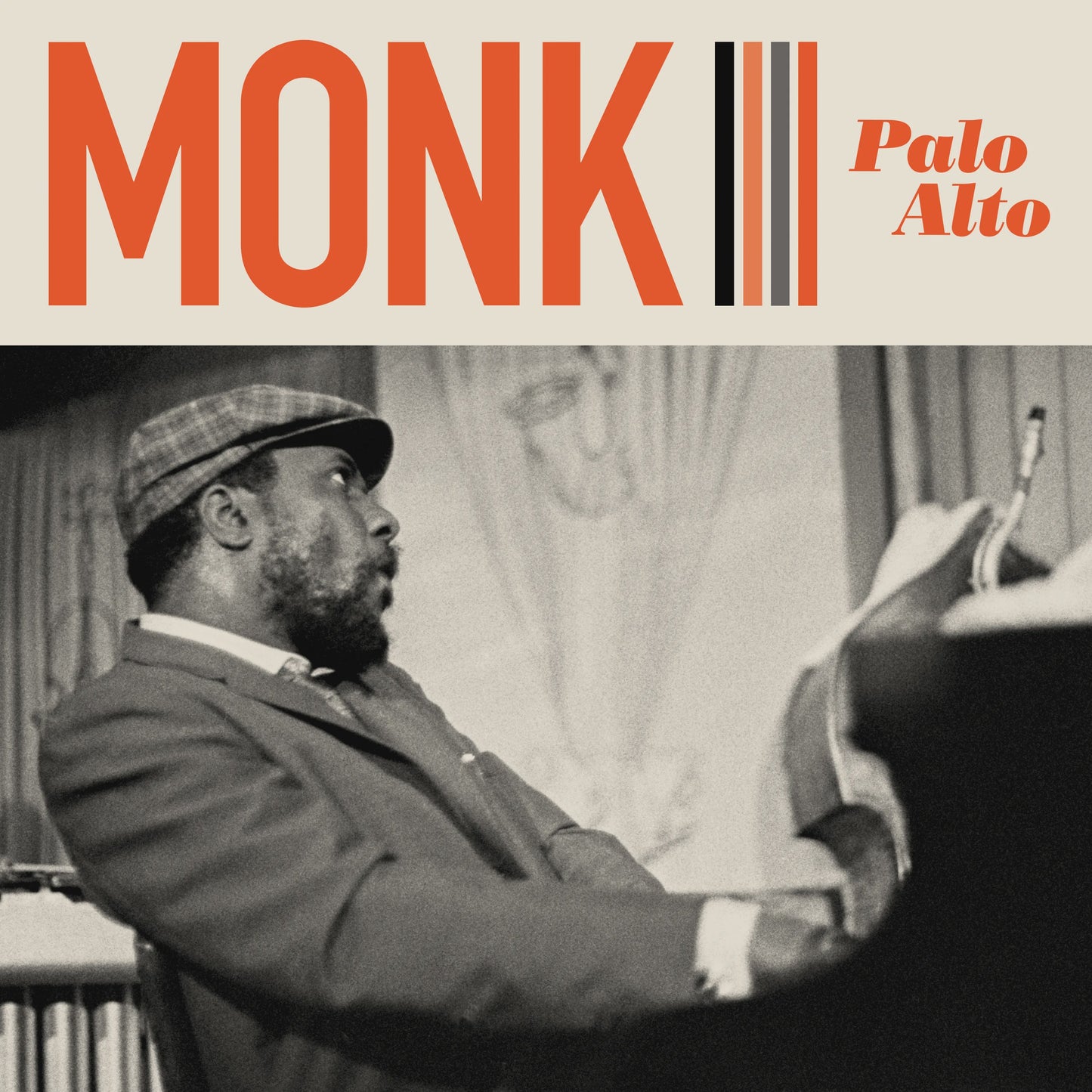
Thelonious Monk Palo Alto
-
Regular price
-
$48.00 SGD
-
Regular price
-
-
Sale price
-
$48.00 SGD
- Unit price
-
per
Couldn't load pickup availability
About
After the assassination of Dr. Martin Luther King, Jr. in 1968, racial tensions across the country rose. Palo Alto, a largely white college town in California, was not immune to the events of the day. Danny Scher, a rising junior at Palo Alto High School, had a dream to bring Thelonious Monk to Palo Alto to perform and help bring about racial unity in his community as well as raise funds for his school’s International Committee. After somehow securing Monk’s services to perform on Sunday, October 27, Scher initially had trouble selling tickets and convincing people that Monk was even going to show up. With many twists and turns along the way and several hundred people waiting in the school’s parking lot to await Monk’s arrival before purchasing tickets, the concert eventually happened and was a triumph in more ways that Monk or Scher could have imagined. This is a recording of that historic concert. — (via Label)
—
Thelonious Monk once said: “Weird means something you never heard before. It’s weird until people get around to it. Then it ceases to be weird.” By the time Monk and his quartet strode into the auditorium at Palo Alto High School on October 27, 1968, people hadn’t just gotten around to his oblong, minimalist take on jazz—they’d left it behind. After decades of toiling in New York’s clubs to little outside recognition, Monk had briefly tasted superstardom, culminating in a 1964 Time magazine cover. Less than half a decade later, he’d slipped to No. 6 on DownBeat’s International Critics Poll ranking jazz’s best pianists, and writers routinely dismissed his playing as stale and uninspired. Still, he was Thelonious Sphere Monk: If he was no longer weird, and no longer a superstar, he was still a legend. A legend who couldn’t afford to miss a $500 payday at a high school.
The live album Palo Alto is a grainy snapshot of Monk and his classic quartet taking a break from their two-week stand at San Francisco’s Jazz Workshop to cut loose and get paid. But just as Monk’s music was characterized by the power of its empty spaces—he’s the person who said, “It’s not the notes you play, it’s those you leave out,” a chestnut as well-worn as any of his songs — Palo Alto’s thrills are made poignant by what was happening in his life unbeknownst to the audience, and what was happening in their life unbeknownst to Monk. This is exuberant, abundant music, made by and performed for people whose lives often felt anything but.
While they were admittedly disinterested in the electric soundscapes labelmate Miles Davis would begin exploring by year’s end, Monk’s quartet showed up to Paly ready to boogie. They run roughshod through “Well, You Needn’t,” a Monk composition from 1944 that was by then a standard of his sets. Though it was typically a vehicle for some of his most wobbly improvisations, here it’s played with the heavy hip-shaking shuffle of an early R&B song. When it’s time for Monk to take the spotlight, he dissolves the song’s theme and goes to work moving around its component parts, his fluid runs set against a supremely funky bassline from Larry Gales, who later upstages his boss with a bowed-bass solo that sketches circles around the hard core of Monk’s playing.
Crucially, the tape captures the response of a rapt crowd. Scher had promoted the concert heavily in East Palo Alto, a largely Black community located just across the Bayshore Freeway from tony Palo Alto. An unincorporated area with no means for self-governance, East Palo Alto was gutted when nearly half of its small businesses were razed to make way for the freeway in 1955, while land grabs by neighboring Menlo Park and Palo Alto itself robbed it of crucial property taxes. Still, the citizens of East Palo Alto resolutely pursued Black empowerment.
Monk was a supporter of the civil rights movement, and his biographer Robin D.G. Kelley suspects that he may have worried that simply playing benefits for CORE and SNCC wasn’t doing enough for the cause. In 1963, he told a French reporter that, while he viewed himself primarily as an American, that didn’t “prevent me from being aware of all the progress that still needs to be made,” adding, “I know my music can help bring people together, and that’s what is important.”
The notion that a great concert can end racism—or affect any kind of meaningful social change—is a convenient myth. Monk’s concert at Palo Alto High School didn’t change the fortune of East Palo Alto any more definitively than the $500 changed Monk’s own financial situation. But by offering a temporary escape from their respective grinds, it gave the artist and his audience a chance to catch their breath, shake themselves free, and revel in the sound of one of jazz’s greatest-ever combos simply enjoying themselves. As the applause rains down following “I Love You (Sweetheart of All My Dreams),” Monk speaks for the first time all afternoon. “We got to hurry back to get to work,” he says. “You dig?” For him, it’s an explanation; for the crowd, it’s an exhortation. — (via Pitchfork)
—
Issued in gatefold jacket with printed inner sleeve.
Includes 12-page 8" × 8" booklet with photos, essays and credits, as well a 12-page 5.25" × 8.25" replica concert program by the Palo Alto High School International Club, and 16.5" × 10.5" replica concert poster.
Issued on reproduction Impulse labels.
Vinyl Tracklist
A1 Ruby, My Dear
A2 Well, You Needn’t
B1 Don’t Blame Me
B2 Blue Monk
B3 Epistrophy
B4 I Love You Sweetheart of All My Dreams
↓
Label: Impulse!
Format: Vinyl, LP, Album, Gatefold
Released: 2020
Genre: Jazz
Style: Hard Bop
File under: Jazz - Thelonious Monk
⦿
Share
- Regular price
- $48.00 SGD
- Regular price
-
- Sale price
- $48.00 SGD
- Unit price
- per
Couldn't load pickup availability
About
After the assassination of Dr. Martin Luther King, Jr. in 1968, racial tensions across the country rose. Palo Alto, a largely white college town in California, was not immune to the events of the day. Danny Scher, a rising junior at Palo Alto High School, had a dream to bring Thelonious Monk to Palo Alto to perform and help bring about racial unity in his community as well as raise funds for his school’s International Committee. After somehow securing Monk’s services to perform on Sunday, October 27, Scher initially had trouble selling tickets and convincing people that Monk was even going to show up. With many twists and turns along the way and several hundred people waiting in the school’s parking lot to await Monk’s arrival before purchasing tickets, the concert eventually happened and was a triumph in more ways that Monk or Scher could have imagined. This is a recording of that historic concert. — (via Label)
—
Thelonious Monk once said: “Weird means something you never heard before. It’s weird until people get around to it. Then it ceases to be weird.” By the time Monk and his quartet strode into the auditorium at Palo Alto High School on October 27, 1968, people hadn’t just gotten around to his oblong, minimalist take on jazz—they’d left it behind. After decades of toiling in New York’s clubs to little outside recognition, Monk had briefly tasted superstardom, culminating in a 1964 Time magazine cover. Less than half a decade later, he’d slipped to No. 6 on DownBeat’s International Critics Poll ranking jazz’s best pianists, and writers routinely dismissed his playing as stale and uninspired. Still, he was Thelonious Sphere Monk: If he was no longer weird, and no longer a superstar, he was still a legend. A legend who couldn’t afford to miss a $500 payday at a high school.
The live album Palo Alto is a grainy snapshot of Monk and his classic quartet taking a break from their two-week stand at San Francisco’s Jazz Workshop to cut loose and get paid. But just as Monk’s music was characterized by the power of its empty spaces—he’s the person who said, “It’s not the notes you play, it’s those you leave out,” a chestnut as well-worn as any of his songs — Palo Alto’s thrills are made poignant by what was happening in his life unbeknownst to the audience, and what was happening in their life unbeknownst to Monk. This is exuberant, abundant music, made by and performed for people whose lives often felt anything but.
While they were admittedly disinterested in the electric soundscapes labelmate Miles Davis would begin exploring by year’s end, Monk’s quartet showed up to Paly ready to boogie. They run roughshod through “Well, You Needn’t,” a Monk composition from 1944 that was by then a standard of his sets. Though it was typically a vehicle for some of his most wobbly improvisations, here it’s played with the heavy hip-shaking shuffle of an early R&B song. When it’s time for Monk to take the spotlight, he dissolves the song’s theme and goes to work moving around its component parts, his fluid runs set against a supremely funky bassline from Larry Gales, who later upstages his boss with a bowed-bass solo that sketches circles around the hard core of Monk’s playing.
Crucially, the tape captures the response of a rapt crowd. Scher had promoted the concert heavily in East Palo Alto, a largely Black community located just across the Bayshore Freeway from tony Palo Alto. An unincorporated area with no means for self-governance, East Palo Alto was gutted when nearly half of its small businesses were razed to make way for the freeway in 1955, while land grabs by neighboring Menlo Park and Palo Alto itself robbed it of crucial property taxes. Still, the citizens of East Palo Alto resolutely pursued Black empowerment.
Monk was a supporter of the civil rights movement, and his biographer Robin D.G. Kelley suspects that he may have worried that simply playing benefits for CORE and SNCC wasn’t doing enough for the cause. In 1963, he told a French reporter that, while he viewed himself primarily as an American, that didn’t “prevent me from being aware of all the progress that still needs to be made,” adding, “I know my music can help bring people together, and that’s what is important.”
The notion that a great concert can end racism—or affect any kind of meaningful social change—is a convenient myth. Monk’s concert at Palo Alto High School didn’t change the fortune of East Palo Alto any more definitively than the $500 changed Monk’s own financial situation. But by offering a temporary escape from their respective grinds, it gave the artist and his audience a chance to catch their breath, shake themselves free, and revel in the sound of one of jazz’s greatest-ever combos simply enjoying themselves. As the applause rains down following “I Love You (Sweetheart of All My Dreams),” Monk speaks for the first time all afternoon. “We got to hurry back to get to work,” he says. “You dig?” For him, it’s an explanation; for the crowd, it’s an exhortation. — (via Pitchfork)
—
Issued in gatefold jacket with printed inner sleeve.
Includes 12-page 8" × 8" booklet with photos, essays and credits, as well a 12-page 5.25" × 8.25" replica concert program by the Palo Alto High School International Club, and 16.5" × 10.5" replica concert poster.
Issued on reproduction Impulse labels.
Vinyl Tracklist
A1 Ruby, My Dear
A2 Well, You Needn’t
B1 Don’t Blame Me
B2 Blue Monk
B3 Epistrophy
B4 I Love You Sweetheart of All My Dreams
↓
Label: Impulse!
Format: Vinyl, LP, Album, Gatefold
Released: 2020
Genre: Jazz
Style: Hard Bop
File under: Jazz - Thelonious Monk
⦿
Share
- Choosing a selection results in a full page refresh.