


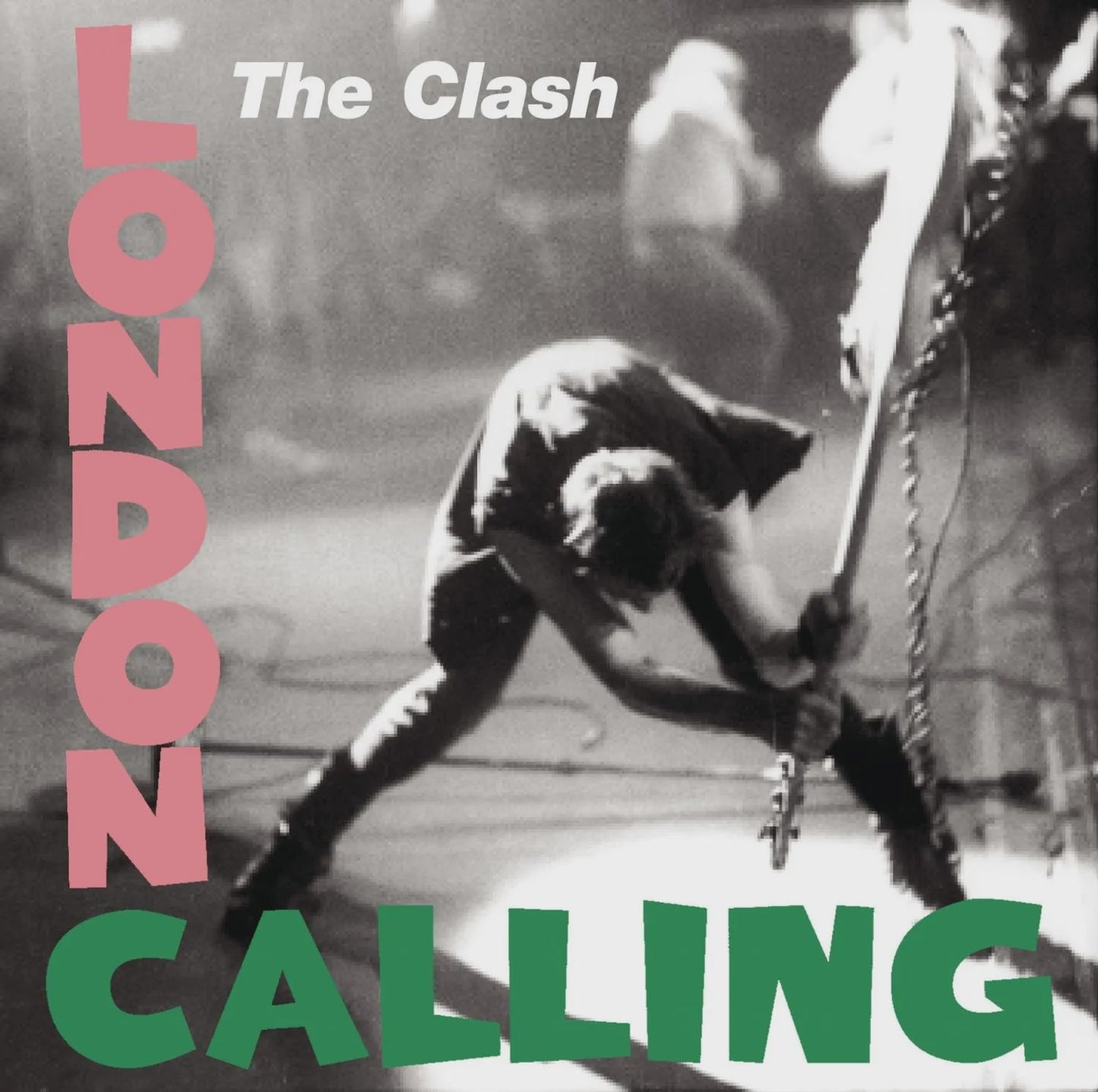
The Clash London Calling (2015 Reissue)
-
Regular price
-
$48.00 SGD
-
Regular price
-
-
Sale price
-
$48.00 SGD
- Unit price
-
per
Couldn't load pickup availability
About
For those who came of age in the late 80s and early 90s, calling The Clash a punk band was (and remains) more a matter of affect than honesty-- in 2004, wholly and completely divorced from a context that never fully resonated with a global audience, The Clash are a rock band, and 1979's London Calling is their creative apex, a booming, infallible tribute to throbbing guitars and spacious ideology. By the late 70s, "punk" was more specifically linked with rusted safety pins, shit-covered Doc Martens, and tight pink sneers than any steadfast, organized philosophy; The Clash insisted on forefronting their politics. This album tackles topical issues with impressive gusto-- the band cocks their cowboy hats, assumes full outlaw position, and pillages the world market for sonic fodder and lyric-ready injustice. A quarter-century after its first release, London Calling is still the concentrate essence of The Clash's unparalleled fervor.
As always, London Calling's title track holds steady as the record's cosmic lynchpin: Horrifyingly apocalyptic, "London Calling" is riddled with weird werewolf howls and big, prophetic hollers, Mick Jones' punchy guitar bursts tapping little nails into our skulls, pushing hard for total lunacy. Empowered and unafraid, Strummer reveals self-skewering prophecies, panting hard about nuclear errors and impending ice ages. He also spitefully lodges some of the most unpleasantly convincing calls to arms ever committed to tape, commanding his followers-- now, then, future-- to storm the streets at full, leg-flailing sprints. Even if The Clash were more blatantly inspired by the musical tenets of dub and reggae, "London Calling" unapologetically cops the fury of punk's blind-and-obliterate full-body windmilling, bypassing the cerebral cortex to sink deep into our muscles. From "London Calling" on, The Clash do not let go; each track builds on the last, pummeling and laughing and slapping us into dumb submission. — (via Pitchfork)
—
Although The Clash may not have been quite drinking in the Last Chance Saloon during the spring of 1979, The Last Gang In Town’s backs were against the wall. Entering the studio managerless and broke, the band came out all guns blazing with London Calling an album that sent a wake-up call to all the ‘faraway towns’.By January 1979, the glorious ball of raging energy that was punk had burnt out. The Sex Pistols had been reduced to a shambolic mess live on stage in San Francisco a year earlier, and while John Lydon had regrouped with the more experimental Public Image Ltd, his sardonic “ever get the feeling you’ve been cheated?” Pistols sign-off seemed a fitting epitaph for a movement that had promised so much.The only true torchbearers left standing appeared to be Messrs Joe Strummer, Mick Jones, Paul Simonon and Topper Headon. However, The Clash themselves were, as Strummer readily admitted in Don Letts’ excellent documentary The Clash: Westway To The World, at their lowest ebb. “I think,” he said, “that is when we showed our greatest mettle.”
In 1989, Rolling Stone ranked London Calling as the best album of the 1980s and 10 years later, Q magazine named it the fourth greatest British album of all time. “Many say that is our finest hour,” said Strummer in Westway To The World. While Simonon added: “The best point of The Clash was probably London Calling. That was the most consistent period.”
Ultimately, London Calling is the sound of The Clash being themselves. Jones said: “I dunno where the sound came from, but I think it is the reflection of your personality and the culmination of all your experiences to date. You can hear all my life coming out in microcosm and then it’s a bigger thing. It is you.” — (via Classic Pop Magazine)
—
Remastered and reissued on 180g, 2LP black vinyl
As per the original release, Train in Vain (track D5) is not listed on the back of the sleeve and the lyrics do not appear on the inner sleeve, but it is listed on the label.
↓
Label: Columbia
Format: 2 x Vinyl, LP, Album, Reissue, Remastered, 180 Gram
Reissued: 2015 / Originally Released: 1979
Genre: Rock
Style: New Wave, Punk
File under: School Of Rock
⦿
Share
- Regular price
- $48.00 SGD
- Regular price
-
- Sale price
- $48.00 SGD
- Unit price
- per
Couldn't load pickup availability
About
For those who came of age in the late 80s and early 90s, calling The Clash a punk band was (and remains) more a matter of affect than honesty-- in 2004, wholly and completely divorced from a context that never fully resonated with a global audience, The Clash are a rock band, and 1979's London Calling is their creative apex, a booming, infallible tribute to throbbing guitars and spacious ideology. By the late 70s, "punk" was more specifically linked with rusted safety pins, shit-covered Doc Martens, and tight pink sneers than any steadfast, organized philosophy; The Clash insisted on forefronting their politics. This album tackles topical issues with impressive gusto-- the band cocks their cowboy hats, assumes full outlaw position, and pillages the world market for sonic fodder and lyric-ready injustice. A quarter-century after its first release, London Calling is still the concentrate essence of The Clash's unparalleled fervor.
As always, London Calling's title track holds steady as the record's cosmic lynchpin: Horrifyingly apocalyptic, "London Calling" is riddled with weird werewolf howls and big, prophetic hollers, Mick Jones' punchy guitar bursts tapping little nails into our skulls, pushing hard for total lunacy. Empowered and unafraid, Strummer reveals self-skewering prophecies, panting hard about nuclear errors and impending ice ages. He also spitefully lodges some of the most unpleasantly convincing calls to arms ever committed to tape, commanding his followers-- now, then, future-- to storm the streets at full, leg-flailing sprints. Even if The Clash were more blatantly inspired by the musical tenets of dub and reggae, "London Calling" unapologetically cops the fury of punk's blind-and-obliterate full-body windmilling, bypassing the cerebral cortex to sink deep into our muscles. From "London Calling" on, The Clash do not let go; each track builds on the last, pummeling and laughing and slapping us into dumb submission. — (via Pitchfork)
—
Although The Clash may not have been quite drinking in the Last Chance Saloon during the spring of 1979, The Last Gang In Town’s backs were against the wall. Entering the studio managerless and broke, the band came out all guns blazing with London Calling an album that sent a wake-up call to all the ‘faraway towns’.By January 1979, the glorious ball of raging energy that was punk had burnt out. The Sex Pistols had been reduced to a shambolic mess live on stage in San Francisco a year earlier, and while John Lydon had regrouped with the more experimental Public Image Ltd, his sardonic “ever get the feeling you’ve been cheated?” Pistols sign-off seemed a fitting epitaph for a movement that had promised so much.The only true torchbearers left standing appeared to be Messrs Joe Strummer, Mick Jones, Paul Simonon and Topper Headon. However, The Clash themselves were, as Strummer readily admitted in Don Letts’ excellent documentary The Clash: Westway To The World, at their lowest ebb. “I think,” he said, “that is when we showed our greatest mettle.”
In 1989, Rolling Stone ranked London Calling as the best album of the 1980s and 10 years later, Q magazine named it the fourth greatest British album of all time. “Many say that is our finest hour,” said Strummer in Westway To The World. While Simonon added: “The best point of The Clash was probably London Calling. That was the most consistent period.”
Ultimately, London Calling is the sound of The Clash being themselves. Jones said: “I dunno where the sound came from, but I think it is the reflection of your personality and the culmination of all your experiences to date. You can hear all my life coming out in microcosm and then it’s a bigger thing. It is you.” — (via Classic Pop Magazine)
—
Remastered and reissued on 180g, 2LP black vinyl
As per the original release, Train in Vain (track D5) is not listed on the back of the sleeve and the lyrics do not appear on the inner sleeve, but it is listed on the label.
↓
Label: Columbia
Format: 2 x Vinyl, LP, Album, Reissue, Remastered, 180 Gram
Reissued: 2015 / Originally Released: 1979
Genre: Rock
Style: New Wave, Punk
File under: School Of Rock
⦿
Share
- Choosing a selection results in a full page refresh.