


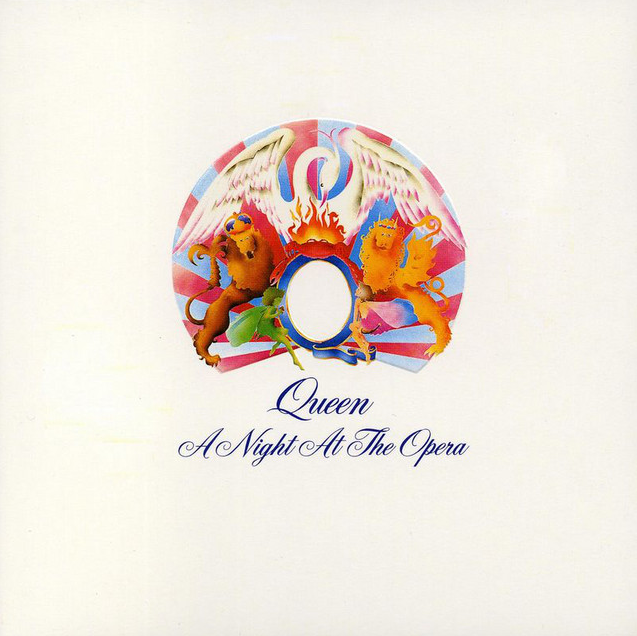
Queen A Night At The Opera (Half Speed Mastered Reissue)
-
Regular price
-
$60.00 SGD
-
Regular price
-
-
Sale price
-
$60.00 SGD
- Unit price
-
per
Couldn't load pickup availability
About
Queen's fourth and probably best known album, was recorded in England between August and November 1975. Such was the complexity of the compositions that no less than six different studios were employed, with the band members often recording various parts simultaneously in order to work most efficiently and get through it all. The sessions were long and gruelling and spanned four long months. Once again the band produced the album with trusted collaborators, Roy Thomas Baker and Mike Stone, and what emerged was a genuine triumph on all levels, meticulously pieced together to make the best possible album. A Night At The Opera would propel Queen on to the world stage on a mammoth scale and establish them as a major international force. Though it was never in any doubt within the band, it proved that Seven Seas Of Rhye and Killer Queen were not fleeting hits from another glam-type British wannabe band; Queen were here to stay and Bohemian Rhapsody and A Night At The Opera would confirm it for those in any doubt. — (via Artist)
—
Queen were straining at the boundaries of hard rock and heavy metal on Sheer Heart Attack, but they broke down all the barricades on A Night at the Opera, a self-consciously ridiculous and overblown hard rock masterpiece. Using the multi-layered guitars of its predecessor as a foundation, A Night at the Opera encompasses metal ("Death on Two Legs," "Sweet Lady"), pop (the lovely, shimmering "You're My Best Friend"), campy British music hall ("Lazing on a Sunday Afternoon," "Seaside Rendezvous"), and mystical prog rock ("'39," "The Prophet's Song"), eventually bringing it all together on the pseudo-operatic "Bohemian Rhapsody."
In short, it's a lot like Queen's own version of Led Zeppelin IV, but where Zep find dark menace in bombast, Queen celebrate their own pomposity. No one in the band takes anything too seriously, otherwise the arrangements wouldn't be as ludicrously exaggerated as they are. But the appeal — and the influence — of A Night at the Opera is in its detailed, meticulous productions. It's prog rock with a sense of humor as well as dynamics, and Queen never bettered their approach anywhere else. — (via AllMusic)
—
In less than three years, with four albums, Queen has risen from the heavy-metal minor leagues to a position approaching that of Led Zeppelin and Deep Purple. But the group has some annoying weaknesses, notably a tendency toward lyrical abstraction. In addition, the imagination that inspired the slick ragtime jazz (with vaudeville overtones) of Sheer Heart Attack’s “Bring Back That Leroy Brown” becomes obsessive on A Night at the Opera, where the same stylistic idea is reworked, into three songs. But ultimately, the group’s willingness to experiment, even when they fail, makes them interesting.
They have the ability to write first-rate pop/rock songs. Guitarist Brian May’s “39” is his best attempt yet at Paul McCartney-style crooning, but it’s on side two that the vocals really take command. On “The Prophet’s Song,” the best track, May’s powerful guitar perfectly complements the rich, multitracked harmonies of lead singer Freddie Mercury. Throughout the record, the group makes the most effective use of vocal rounds, choruses and harmonies in the heavy-rock genre since Argent’s Ring of Hands. — (via Rolling Stone)
—
— Pressed on 180g heavyweight black vinyl
— Half-speed mastered reissue
— Housed in gatefold jacket with embossed prints
— Includes inner sleeve containing photographs and additional credits
↓
Label: Hollywood Records
Format: Vinyl, LP, Album, Reissue, Half Speed Mastered, 180 Gram
Reissued: 2022 / Originally Released: 1975
Genre: Rock
Style: Arena Rock, Classic Rock, Prog Rock
File under: School of Rock
⦿
Share
- Regular price
- $60.00 SGD
- Regular price
-
- Sale price
- $60.00 SGD
- Unit price
- per
Couldn't load pickup availability
About
Queen's fourth and probably best known album, was recorded in England between August and November 1975. Such was the complexity of the compositions that no less than six different studios were employed, with the band members often recording various parts simultaneously in order to work most efficiently and get through it all. The sessions were long and gruelling and spanned four long months. Once again the band produced the album with trusted collaborators, Roy Thomas Baker and Mike Stone, and what emerged was a genuine triumph on all levels, meticulously pieced together to make the best possible album. A Night At The Opera would propel Queen on to the world stage on a mammoth scale and establish them as a major international force. Though it was never in any doubt within the band, it proved that Seven Seas Of Rhye and Killer Queen were not fleeting hits from another glam-type British wannabe band; Queen were here to stay and Bohemian Rhapsody and A Night At The Opera would confirm it for those in any doubt. — (via Artist)
—
Queen were straining at the boundaries of hard rock and heavy metal on Sheer Heart Attack, but they broke down all the barricades on A Night at the Opera, a self-consciously ridiculous and overblown hard rock masterpiece. Using the multi-layered guitars of its predecessor as a foundation, A Night at the Opera encompasses metal ("Death on Two Legs," "Sweet Lady"), pop (the lovely, shimmering "You're My Best Friend"), campy British music hall ("Lazing on a Sunday Afternoon," "Seaside Rendezvous"), and mystical prog rock ("'39," "The Prophet's Song"), eventually bringing it all together on the pseudo-operatic "Bohemian Rhapsody."
In short, it's a lot like Queen's own version of Led Zeppelin IV, but where Zep find dark menace in bombast, Queen celebrate their own pomposity. No one in the band takes anything too seriously, otherwise the arrangements wouldn't be as ludicrously exaggerated as they are. But the appeal — and the influence — of A Night at the Opera is in its detailed, meticulous productions. It's prog rock with a sense of humor as well as dynamics, and Queen never bettered their approach anywhere else. — (via AllMusic)
—
In less than three years, with four albums, Queen has risen from the heavy-metal minor leagues to a position approaching that of Led Zeppelin and Deep Purple. But the group has some annoying weaknesses, notably a tendency toward lyrical abstraction. In addition, the imagination that inspired the slick ragtime jazz (with vaudeville overtones) of Sheer Heart Attack’s “Bring Back That Leroy Brown” becomes obsessive on A Night at the Opera, where the same stylistic idea is reworked, into three songs. But ultimately, the group’s willingness to experiment, even when they fail, makes them interesting.
They have the ability to write first-rate pop/rock songs. Guitarist Brian May’s “39” is his best attempt yet at Paul McCartney-style crooning, but it’s on side two that the vocals really take command. On “The Prophet’s Song,” the best track, May’s powerful guitar perfectly complements the rich, multitracked harmonies of lead singer Freddie Mercury. Throughout the record, the group makes the most effective use of vocal rounds, choruses and harmonies in the heavy-rock genre since Argent’s Ring of Hands. — (via Rolling Stone)
—
— Pressed on 180g heavyweight black vinyl
— Half-speed mastered reissue
— Housed in gatefold jacket with embossed prints
— Includes inner sleeve containing photographs and additional credits
↓
Label: Hollywood Records
Format: Vinyl, LP, Album, Reissue, Half Speed Mastered, 180 Gram
Reissued: 2022 / Originally Released: 1975
Genre: Rock
Style: Arena Rock, Classic Rock, Prog Rock
File under: School of Rock
⦿
Share
- Choosing a selection results in a full page refresh.