


Mohinder Kaur Bhamra Punjabi Disco
-
Regular price
-
$55.00 SGD
-
Regular price
-
-
Sale price
-
$55.00 SGD
- Unit price
-
per
Couldn't load pickup availability
About
Naya Beat is delighted to announce the release of an astonishing lost “holy grail”, Mohinder Kaur Bhamra’s 1982 masterpiece Punjabi Disco. The reissue includes remixes by Peaking Lights, Danger Boys, Psychemagik, Dexter+Franz, Mystic Jungle, and Baalti, as well as a cover by Say She She’s Piya Malik and Turbotito & Ragz.
Unknown and inaccessible to even the deepest of diggers, Punjabi Disco is the first-ever British Asian electronic dance album recorded and a true lost relic. A chance find of the original multitrack masters during the Covid lockdown and a tip off from Massimo di Lena of Nu Genea on the record’s existence led to this reissue. Lovingly mixed down and remastered from the studio recordings, the release includes a newly discovered track.
Released the same year and into equal obscurity as Ten Ragas To A Disco Beat, Charanjit Singh’s acid house opus, the reissue of Punjabi Disco is set to have similar reverberations in the world of dance music. Produced by Mohinder’s eldest son and legendary bhangra pioneer Kuljit Bhamra using a recently acquired Roland SH-1000 synthesiser and a CR-8000 CompuRhythm drum machine played by his then 11-year-old brother, the album was recorded at Roxy Music bass player Rick Kenton’s studio in London. The concept for a Punjabi disco album was subsequently stolen by the very music label that had agreed to distribute the record. Eventually self-released with no label support, ‘Punjabi Disco’ vanished into complete obscurity.
A pivotal figure in British Asian music, West London-based vocalist and first-generation immigrant Mohinder Kaur Bhamra became the first woman to sing at Punjabi weddings and other community events in the UK. Her son, Kuljit, would accompany her, playing tabla at her events from the age of six. Wedding music was traditionally a tame, segregated affair: men and women seated and separated on opposite sides of the room. Punjabi Disco was born out of a desire to desegregate the dancefloor and inspired by the sounds of disco from the era. A tapestry of electric drum rhythm, warbling bass, and psychedelic siren-like Roland synth melodies provide a vehicle for Mohinder’s powerful voice. Part disco, part funk, part acid house, and infused with Punjabi folk melodies, the sound of ‘Punjabi Disco’ is as mesmerising as it is undefinable.
Featuring an incredible gatefold package and exhaustive liner notes by the Guardian’s Global Music Critic, Ammar Kalia, the x2LP release has been cut to vinyl for the discerning listener and DJ by Grammy-nominated Frank Merritt from The Carvery, London.
This is Naya Beat’s ninth release in a series of reissues, remixes, and compilations dedicated to uncovering electronic and dance music from the subcontinent and South Asian diaspora. — (via Label)
—
Armed with the SH-1000—the first Roland synthesizer—and a Compurhythm CR-8000 drum machine, 22-year-old Kuljit Bhamra would spend all day crafting siren-horn loops and bubbling basslines, melding disco and funk experiments with the rhythms and melodies of Punjabi folk. His 11-year-old brother, Ambi, would often sit in on the drum machine. In the evening, they’d play the demos for Mohinder, who’d pen Punjabi lyrics to sing over them, delivering songs of love and yearning in a melismatic, full-throated voice. Those sketches would crystallize into Punjabi Disco, the first-ever British Asian electronic dance album—a joyous, loose-limbed romp through Punjabi-tinged disco, funk, psychedelia, and proto-acid house.
The family kitchen is an odd birthplace for a pioneering dance music record, but in the context of the 1980s British Asian experience, it’s also a fitting one. Outside the home, the only places where music was regularly performed were gurdwaras and temples—where the songs were strictly devotional—or during community weddings. Those were the arenas where Mohinder—trained as a gyani, or Sikh devotional singer—honed her voice after moving to the UK in 1961. But the weddings they played were sedate affairs, men and women seated apart, movement limited to tapping feet. The Bhamras set out to change that—Kuljit and his brothers clearing tables to open space on the floor, Mohinder urging the women forward, sometimes refusing to sing unless they were allowed to dance too. This represented one of the first desegregated South Asian dance spaces in Britain, and on Punjabi Disco, the Bhamras created a new sound to fill it, drawing inspiration from the disco mania that followed 1979’s Saturday Night Fever.
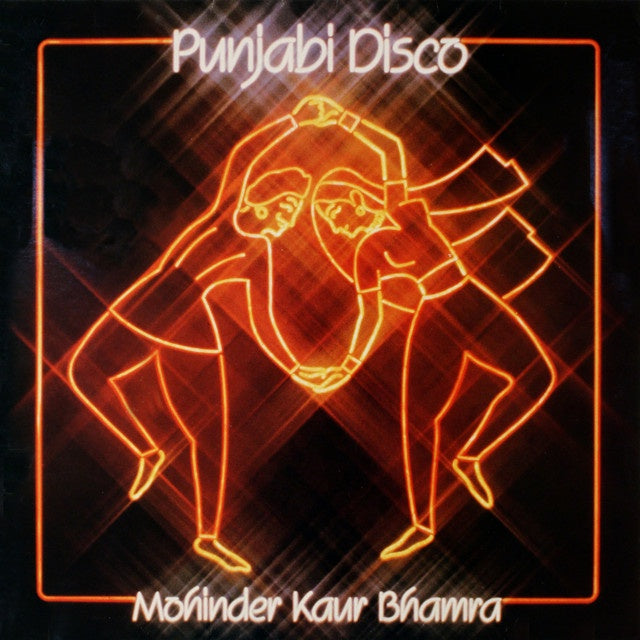
Recorded over a few days at a local studio owned by Savage Process bassist Rik Kenton, Punjabi Disco was a family project through and through—Mohinder on vocals, Kuljit and Ambi handling the synthesizer and drum machine, Kuljit’s high school friend Trevor Michael Georges on bass, and brother Satpaul designing the neon-sign cover. “Everything just clicked,” Kuljit says. “We thought people would love it.” — (via Pitchfork)
↓
Label: Naya Beat Records
Format: 2 x Vinyl, LP, Album, Stereo
Reissued: 2025 / Original: 1982
Genre: Electronic, Funk / Soul, Folk, World
Style: Disco, Acid House, Bhangra, Nu-Disco, Boogie, House
File under: Global Sounds
⦿
Share
- Regular price
- $55.00 SGD
- Regular price
-
- Sale price
- $55.00 SGD
- Unit price
- per
Couldn't load pickup availability
About
Naya Beat is delighted to announce the release of an astonishing lost “holy grail”, Mohinder Kaur Bhamra’s 1982 masterpiece Punjabi Disco. The reissue includes remixes by Peaking Lights, Danger Boys, Psychemagik, Dexter+Franz, Mystic Jungle, and Baalti, as well as a cover by Say She She’s Piya Malik and Turbotito & Ragz.
Unknown and inaccessible to even the deepest of diggers, Punjabi Disco is the first-ever British Asian electronic dance album recorded and a true lost relic. A chance find of the original multitrack masters during the Covid lockdown and a tip off from Massimo di Lena of Nu Genea on the record’s existence led to this reissue. Lovingly mixed down and remastered from the studio recordings, the release includes a newly discovered track.
Released the same year and into equal obscurity as Ten Ragas To A Disco Beat, Charanjit Singh’s acid house opus, the reissue of Punjabi Disco is set to have similar reverberations in the world of dance music. Produced by Mohinder’s eldest son and legendary bhangra pioneer Kuljit Bhamra using a recently acquired Roland SH-1000 synthesiser and a CR-8000 CompuRhythm drum machine played by his then 11-year-old brother, the album was recorded at Roxy Music bass player Rick Kenton’s studio in London. The concept for a Punjabi disco album was subsequently stolen by the very music label that had agreed to distribute the record. Eventually self-released with no label support, ‘Punjabi Disco’ vanished into complete obscurity.
A pivotal figure in British Asian music, West London-based vocalist and first-generation immigrant Mohinder Kaur Bhamra became the first woman to sing at Punjabi weddings and other community events in the UK. Her son, Kuljit, would accompany her, playing tabla at her events from the age of six. Wedding music was traditionally a tame, segregated affair: men and women seated and separated on opposite sides of the room. Punjabi Disco was born out of a desire to desegregate the dancefloor and inspired by the sounds of disco from the era. A tapestry of electric drum rhythm, warbling bass, and psychedelic siren-like Roland synth melodies provide a vehicle for Mohinder’s powerful voice. Part disco, part funk, part acid house, and infused with Punjabi folk melodies, the sound of ‘Punjabi Disco’ is as mesmerising as it is undefinable.
Featuring an incredible gatefold package and exhaustive liner notes by the Guardian’s Global Music Critic, Ammar Kalia, the x2LP release has been cut to vinyl for the discerning listener and DJ by Grammy-nominated Frank Merritt from The Carvery, London.
This is Naya Beat’s ninth release in a series of reissues, remixes, and compilations dedicated to uncovering electronic and dance music from the subcontinent and South Asian diaspora. — (via Label)
—
Armed with the SH-1000—the first Roland synthesizer—and a Compurhythm CR-8000 drum machine, 22-year-old Kuljit Bhamra would spend all day crafting siren-horn loops and bubbling basslines, melding disco and funk experiments with the rhythms and melodies of Punjabi folk. His 11-year-old brother, Ambi, would often sit in on the drum machine. In the evening, they’d play the demos for Mohinder, who’d pen Punjabi lyrics to sing over them, delivering songs of love and yearning in a melismatic, full-throated voice. Those sketches would crystallize into Punjabi Disco, the first-ever British Asian electronic dance album—a joyous, loose-limbed romp through Punjabi-tinged disco, funk, psychedelia, and proto-acid house.
The family kitchen is an odd birthplace for a pioneering dance music record, but in the context of the 1980s British Asian experience, it’s also a fitting one. Outside the home, the only places where music was regularly performed were gurdwaras and temples—where the songs were strictly devotional—or during community weddings. Those were the arenas where Mohinder—trained as a gyani, or Sikh devotional singer—honed her voice after moving to the UK in 1961. But the weddings they played were sedate affairs, men and women seated apart, movement limited to tapping feet. The Bhamras set out to change that—Kuljit and his brothers clearing tables to open space on the floor, Mohinder urging the women forward, sometimes refusing to sing unless they were allowed to dance too. This represented one of the first desegregated South Asian dance spaces in Britain, and on Punjabi Disco, the Bhamras created a new sound to fill it, drawing inspiration from the disco mania that followed 1979’s Saturday Night Fever.
Recorded over a few days at a local studio owned by Savage Process bassist Rik Kenton, Punjabi Disco was a family project through and through—Mohinder on vocals, Kuljit and Ambi handling the synthesizer and drum machine, Kuljit’s high school friend Trevor Michael Georges on bass, and brother Satpaul designing the neon-sign cover. “Everything just clicked,” Kuljit says. “We thought people would love it.” — (via Pitchfork)
↓
Label: Naya Beat Records
Format: 2 x Vinyl, LP, Album, Stereo
Reissued: 2025 / Original: 1982
Genre: Electronic, Funk / Soul, Folk, World
Style: Disco, Acid House, Bhangra, Nu-Disco, Boogie, House
File under: Global Sounds
⦿
Share
- Choosing a selection results in a full page refresh.