


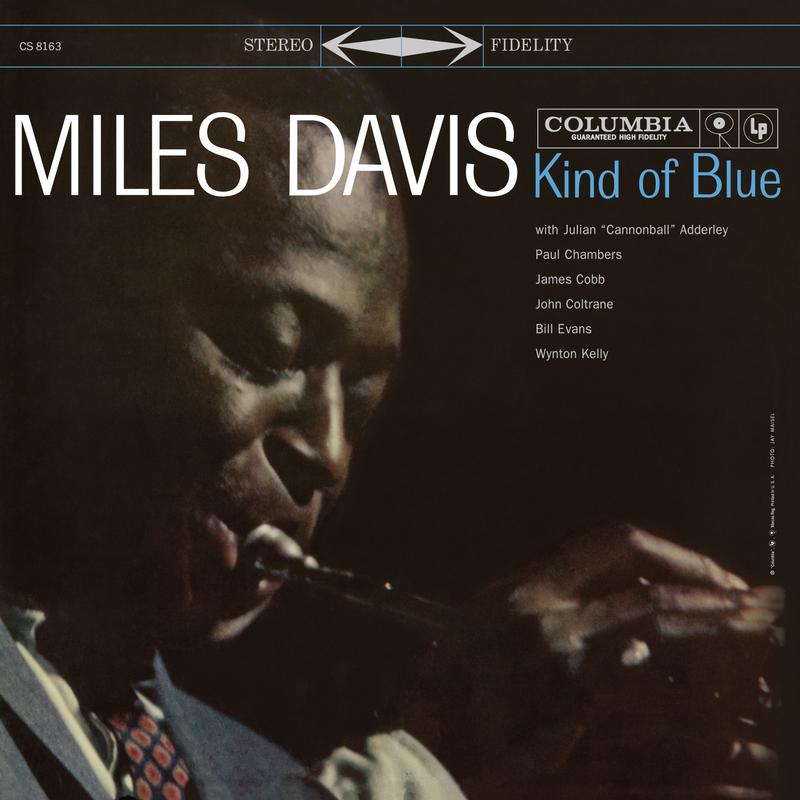
Miles Davis Kind Of Blue (Mono 2013 Reissue 180g)
-
Regular price
-
$48.00 SGD
-
Regular price
-
-
Sale price
-
$48.00 SGD
- Unit price
-
per
Couldn't load pickup availability
About
— The Analog Vault // Essential Listening —
The American jazz cannon brims with brilliance, but if one had to pick the definitive jazz album, most would point to Miles Davis’ Kind of Blue. Beyond being a paragon of its own storied genre, Kind of Blue is undoubtedly one of the greatest works of art of the 20th century.
Captained by Davis alongside a dream team of Cannonball Adderley, John Coltrane, Bill Evans, Wynton Kelly, Paul Chambers and Jimmy Cobb - this album remains revolutionarily inventive. With only the barest sketch of a concept in mind, these seven masters took turns leading the music in directions that defied strict chord progressions - resulting in something immensely cool, romantic, melancholic and melodic. Kind of Blue is that rare, universally-beloved record in the entire jazz canon. - The Analog Vault
—
Legends have a way of sticking around. If there was ever an album awaiting a high-fidelity, custom-pressed vinyl treatment of the level you now hold in your hands, it is Miles Davis' Kind of Blue. The top-selling jazz album of all time, it has been lauded, entered into "Best Of" lists and Halls of Fame, and universally acknowledged as a landmark recording - a five-track masterpiece of melancholy mood and melody.
It continues to be one of the most listened-to and studied recordings of all time, a required primer for many young musicians, and one of the most transcendent pieces of music ever recorded. Davis played trumpet sublime with his ensemble sextet featuring pianist Bill Evans, drummer Jimmy Cobb, bassist Paul Chambers, and saxophonists John Coltrane and Julian "Cannonball" Adderley with Wynton Kelly playing piano on "Freddy the Freeloader."
Kind of Blue is more than Miles Davis's most enduring recording, it's a testament to Miles' experimental approach, drastically simplifying modern jazz by returning to melody unlike the chord complexity more often heard at the time. "The music has gotten thick," Davis complained in a 1958 interview for The Jazz Review. "... There will be fewer chords but infinite possibilities as to what to do with them."
Kind of Blue is, in a sense, all melody — and atmosphere.
None of the musicians had played any of the tunes before heading into the first of two recording sessions in early spring of 1959. In fact Miles had written out the settings for most of them only a few hours before the session. Miles also stuck to his old recording procedure of having virtually no rehearsal and only one take for each tune.
Miles remained proud of the album, performing at least two of its tracks — "So What" and "All Blues" — for years after, until his musical path took him in a different direction.
History was on the side of Kind of Blue; it was born in 1959, at the peak of the golden age of high-fidelity, featuring innovations in studio equipment (magnetic tape, high-quality condenser microphones), matched by advancements in home audio reproduction (long-player records — LPs; high-end turntables, and other stereo components). Kind of Blue also benefited from Miles' being signed to the leading major record company of the day — Columbia Records, a part of the CBS media conglomerate. Columbia had the means and wisdom to invest in cutting edge recording technology, and their own professional recording studio — (via Acoustic Sounds)
—
Kind of Blue isn't merely an artistic highlight for Miles Davis, it's an album that towers above its peers, a record generally considered as the definitive jazz album. To be reductive, it's the Citizen Kane of jazz -- an accepted work of greatness that's innovative and entertaining. That may not mean it's the greatest jazz album ever made, but it certainly is a universally acknowledged standard of excellence. Why does Kind of Blue posses such a mystique? Perhaps it's that this music never flaunts its genius. It lures listeners in with the slow, luxurious bassline and gentle piano chords of "So What." From that moment on, the record never really changes pace - each tune has a similar relaxed feel, as the music flows easily. Yet Kind of Blue is more than easy listening. It's the pinnacle of modal jazz - tonality and solos build from chords, not the overall key, giving the music a subtly shifting quality.
All of this doesn't quite explain why seasoned jazz fans return to this record even after they've memorized every nuance. They return because this is an exceptional band - Miles, Coltrane, Bill Evans, Cannonball Adderly, Paul Chambers, Jimmy Cobb, and Wynton Kelly - one of the greatest in history, playing at the peak of its power. As Evans said in the original liner notes for the record, the band did not play through any of these pieces prior to recording. Davis laid out the themes and chords before the tape rolled, and then the band improvised. The end results were wondrous, filled with performances that still crackle with vitality. Few albums of any genre manage to work on so many different levels, but Kind of Blue does. It can be played as background music, yet it amply rewards close listening. It is advanced music that is extraordinarily enjoyable. It may be a stretch to say that if you don't like Kind of Blue, you don't like jazz -- but it's hard to imagine it as anything other than a cornerstone of any jazz collection. — (via AllMusic)
—
Ranked No. 13 in Rolling Stone's 500 Greatest Albums Of All Time. "This painterly masterpiece is one of the most important, influential, and popular albums in jazz."
↓
Label: Columbia
Series: Miles Davis - The Original Mono Recordings
Format: Vinyl, LP, Album, Limited Edition, Reissue, Remastered, Mono, 180gr
Country: US
Reissued: 2013 / Original Release: 1959
Genre: Jazz
Style: Modal
File under: Jazz - Trumpet
⦿
Share
- Regular price
- $48.00 SGD
- Regular price
-
- Sale price
- $48.00 SGD
- Unit price
- per
Couldn't load pickup availability
About
— The Analog Vault // Essential Listening —
The American jazz cannon brims with brilliance, but if one had to pick the definitive jazz album, most would point to Miles Davis’ Kind of Blue. Beyond being a paragon of its own storied genre, Kind of Blue is undoubtedly one of the greatest works of art of the 20th century.
Captained by Davis alongside a dream team of Cannonball Adderley, John Coltrane, Bill Evans, Wynton Kelly, Paul Chambers and Jimmy Cobb - this album remains revolutionarily inventive. With only the barest sketch of a concept in mind, these seven masters took turns leading the music in directions that defied strict chord progressions - resulting in something immensely cool, romantic, melancholic and melodic. Kind of Blue is that rare, universally-beloved record in the entire jazz canon. - The Analog Vault
—
Legends have a way of sticking around. If there was ever an album awaiting a high-fidelity, custom-pressed vinyl treatment of the level you now hold in your hands, it is Miles Davis' Kind of Blue. The top-selling jazz album of all time, it has been lauded, entered into "Best Of" lists and Halls of Fame, and universally acknowledged as a landmark recording - a five-track masterpiece of melancholy mood and melody.
It continues to be one of the most listened-to and studied recordings of all time, a required primer for many young musicians, and one of the most transcendent pieces of music ever recorded. Davis played trumpet sublime with his ensemble sextet featuring pianist Bill Evans, drummer Jimmy Cobb, bassist Paul Chambers, and saxophonists John Coltrane and Julian "Cannonball" Adderley with Wynton Kelly playing piano on "Freddy the Freeloader."
Kind of Blue is more than Miles Davis's most enduring recording, it's a testament to Miles' experimental approach, drastically simplifying modern jazz by returning to melody unlike the chord complexity more often heard at the time. "The music has gotten thick," Davis complained in a 1958 interview for The Jazz Review. "... There will be fewer chords but infinite possibilities as to what to do with them."
Kind of Blue is, in a sense, all melody — and atmosphere.
None of the musicians had played any of the tunes before heading into the first of two recording sessions in early spring of 1959. In fact Miles had written out the settings for most of them only a few hours before the session. Miles also stuck to his old recording procedure of having virtually no rehearsal and only one take for each tune.
Miles remained proud of the album, performing at least two of its tracks — "So What" and "All Blues" — for years after, until his musical path took him in a different direction.
History was on the side of Kind of Blue; it was born in 1959, at the peak of the golden age of high-fidelity, featuring innovations in studio equipment (magnetic tape, high-quality condenser microphones), matched by advancements in home audio reproduction (long-player records — LPs; high-end turntables, and other stereo components). Kind of Blue also benefited from Miles' being signed to the leading major record company of the day — Columbia Records, a part of the CBS media conglomerate. Columbia had the means and wisdom to invest in cutting edge recording technology, and their own professional recording studio — (via Acoustic Sounds)
—
Kind of Blue isn't merely an artistic highlight for Miles Davis, it's an album that towers above its peers, a record generally considered as the definitive jazz album. To be reductive, it's the Citizen Kane of jazz -- an accepted work of greatness that's innovative and entertaining. That may not mean it's the greatest jazz album ever made, but it certainly is a universally acknowledged standard of excellence. Why does Kind of Blue posses such a mystique? Perhaps it's that this music never flaunts its genius. It lures listeners in with the slow, luxurious bassline and gentle piano chords of "So What." From that moment on, the record never really changes pace - each tune has a similar relaxed feel, as the music flows easily. Yet Kind of Blue is more than easy listening. It's the pinnacle of modal jazz - tonality and solos build from chords, not the overall key, giving the music a subtly shifting quality.
All of this doesn't quite explain why seasoned jazz fans return to this record even after they've memorized every nuance. They return because this is an exceptional band - Miles, Coltrane, Bill Evans, Cannonball Adderly, Paul Chambers, Jimmy Cobb, and Wynton Kelly - one of the greatest in history, playing at the peak of its power. As Evans said in the original liner notes for the record, the band did not play through any of these pieces prior to recording. Davis laid out the themes and chords before the tape rolled, and then the band improvised. The end results were wondrous, filled with performances that still crackle with vitality. Few albums of any genre manage to work on so many different levels, but Kind of Blue does. It can be played as background music, yet it amply rewards close listening. It is advanced music that is extraordinarily enjoyable. It may be a stretch to say that if you don't like Kind of Blue, you don't like jazz -- but it's hard to imagine it as anything other than a cornerstone of any jazz collection. — (via AllMusic)
—
Ranked No. 13 in Rolling Stone's 500 Greatest Albums Of All Time. "This painterly masterpiece is one of the most important, influential, and popular albums in jazz."
↓
Label: Columbia
Series: Miles Davis - The Original Mono Recordings
Format: Vinyl, LP, Album, Limited Edition, Reissue, Remastered, Mono, 180gr
Country: US
Reissued: 2013 / Original Release: 1959
Genre: Jazz
Style: Modal
File under: Jazz - Trumpet
⦿
Share
- Choosing a selection results in a full page refresh.