


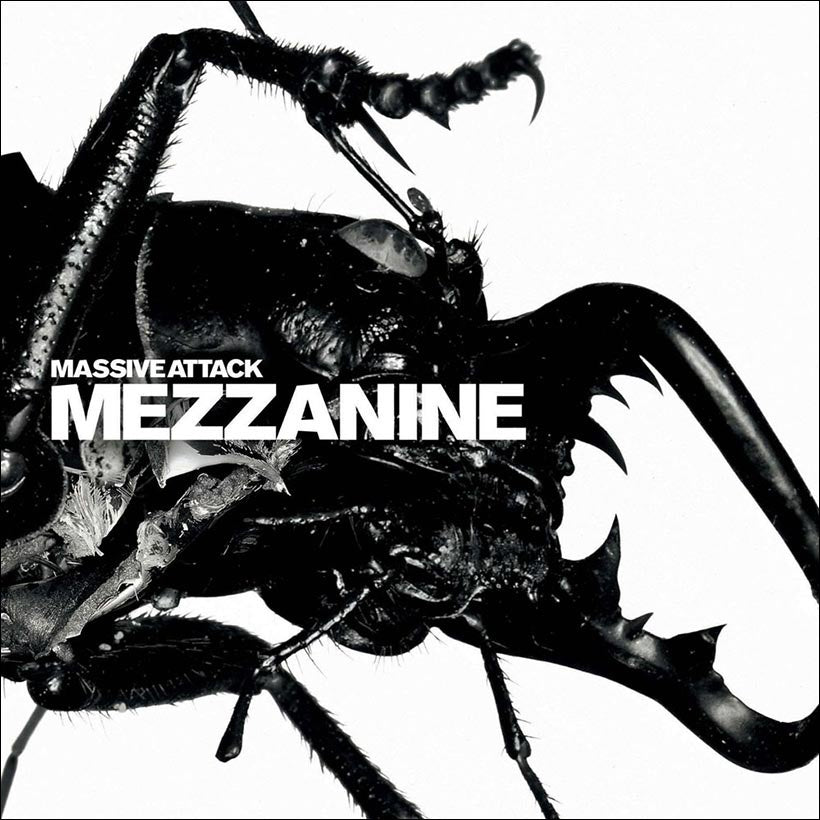
Massive Attack Mezzanine
-
Regular price
-
$75.00 SGD
-
Regular price
-
-
Sale price
-
$75.00 SGD
- Unit price
-
per
Couldn't load pickup availability
About
— The Analog Vault // Essential Listening —
Anyone experiencing Massive Attack’s third studio effort for the first time instantly imagines the album soundtracking their life’s most pivotal and dramatic moments. It’s certainly no wonder that Mezzanine has gone on to soundtrack some of the most memorable scenes in film and television history.
Every song on this LP feels cinematic on both the conscious and subconscious levels. Conceptualised by their lead Robert Del Naja who wanted to create something darker than the Bristol crew’s previous works, Mezzanine marks a noticeable departure from the jazzy, laidback sound of Blue Lines and Protection. Anchored by classic tracks such as “Teardrop”, featuring Elizabeth Fraser from Cocteau Twins, this album’s bleak and blurry trip hop tones invariably embeds itself in the listener’s echoic memory. — The Analog Vault
—
Increasingly ignored amidst the exploding trip-hop scene, Massive Attack finally returned in 1998 with Mezzanine, a record immediately announcing not only that the group was back, but that they'd recorded a set of songs just as singular and revelatory as on their debut, almost a decade back.
It all begins with a stunning one-two-three-four punch: "Angel," "Risingson," "Teardrop," and "Inertia Creeps." Augmenting their samples and keyboards with a studio band, Massive Attack open with "Angel," a stark production featuring pointed beats and a distorted bassline that frames the vocal (by group regular Horace Andy) and a two-minute flame-out with raging guitars. "Risingson" is a dense, dark feature for Massive Attack themselves (on production as well as vocals), with a kitchen sink's worth of dubby effects and reverb. "Teardrop" introduces another genius collaboration -- with Elizabeth Fraser from Cocteau Twins -- from a production unit with a knack for recruiting gifted performers.
The blend of earthy with ethereal shouldn't work at all, but Massive Attack pull it off in fine fashion. "Inertia Creeps" could well be the highlight, another feature for just the core threesome. With eerie atmospherics, fuzz-tone guitars, and a wealth of effects, the song could well be the best production from the best team of producers the electronic world had ever seen. Obviously, the rest of the album can't compete, but there's certainly no sign of the side-two slump heard on Protection, as both Andy and Fraser return for excellent, mid-tempo tracks ("Man Next Door" and "Black Milk," respectively). — (via John Bush // AllMusic)
—
Some records define a movement, others a whole period of time. Some records might even dominate the zeitgeist for years to come, or at least fester in the subconscious of pop culture’s collective memory for a long, long time. I’m not even sure in which of these categories to place Massive Attack‘s massive (pun wholeheartedly intended) third album Mezzanine; perhaps it’s too fitting for all of them to reduce it to one kind of impact. Be it as it may, this gargantuan, widely acclaimed and influential recording was released 25 years ago by now, which makes it inevitable that it would appear on A Scene In Retrospect around this time.
Joe McKenna: "The year is 1998, the English city of Bristol is facing a period of immense cultural change the likes this Southern West city has ever seen. After an assimilation of soul, reggae, dub, and hip hop being dispersed across Bristol’s mid-’80s club scene, many of these transatlantic samples and sounds that found their way into sound systems of creatively stimulated DJs and audio engineers. Cue Massive Attack, often coined under the ‘trip-hop’ genre tagline, this west country electronic collective embodied a degree of style and aesthetic that was far too sonically expansive to fall under one particular genre. This, of course, cannot be clearer for the group than on their third studio release, Mezzanine.
At a time when Massive Attack became somewhat a voice for an entire youth subculture disillusioned by the turmoil of the Thatcher years a decade prior; the false hope given by a new Labour government; and general the declining socio-political landscape that plagued their future, their music had always strived to distance from other forms of dance music within the Bristol scene to convey a more socially-conscious message, yet it was with Mezzanine that the band truly augmented their rebellious outsider status within the dance scene that consisted of an unorthodox sonic palette that pushed experimentation with new aesthetic territories personifying notions of punk rock and industrial on top of hip hop and dub music.
I’ve always gravitated towards sounds that exude a dark and sinister tone, as they tend to be most successful in holding my intrigue for the mysterious and confrontational concepts that are buried within them; to find that in Mezzanine, however, was an entire new feeling that I still can’t quite describe so clearly. The overall tone needed not be too heavy, too extreme, too socially objective, too controversial for it to still evoke a darker aesthetic; rather the songs on this album are more concerned with exploring numerous outlandish musical realms that formulate it’s atmosphere. Take “Inertia Creeps” as an example of this carefully woven web of chilling beats that interlace with several abnormal textures to create this unstable sensation.
“Dissolved Girl” was another one of these darker tracks I found myself attached to, due to its enigmatic sonic qualities that somewhat radiated a sort of warm energy at the same time, when you take the dissident electronic patterns and distorted, mechanised punk riffs whilst Shara Nelson’s icy vocal delivery adds a layer of mystique to the piece. Another personal favourite, and what I think is one of the record’s more distinguished tracks, “Teardrop” combines layers of tense melodramatic harmony, melodic plucks, and entrancing electro-beats to formulate an enchanting soundscape that allows you to fall into an otherworldly hole of mystery.
Another interesting aspect of this record I never really looked too much into the first time around, and what I’ve been most drawn to whilst writing this piece, is the heavily nuanced and intricate use of samples that are dispersed across many of Mezzanine’s tracks. These samples are pretty evident of Massive Attack’s roots in reggae, punk, industrial, dub, and even folk music, particularly in the song “Risingson” that makes lyrical reference to “Dennis the Menace” (Dennis Pinnock), “I Found a Reason” (The Velvet Underground), and “Where Have All The Flowers Gone” (Pete Seegar), truly showing exceptionally high degree of musical diversity and nuance. The fact that the band were able to include a list of samples that expands over from ’60s/’70s Caribbean rocksteady innovators to notorious hard rock contemporaries just goes to demonstrate the driving ambition and creative exchange that was present within Massive Attack’s musicianship at this time.
I could go on about wide assortment of artists and songs being used within the Mezzanine repertoire, but since there’s plenty of videos and analysis of that already for you to really dig into, there’s not much more left to say about this strangely unique and quite mesmerising record, other than maybe arguing that this is one of those albums that stands out for its day not just because of how it created something that stood it apart from other electronic and trip hop music that was being produced around the same time, but also because Mezzanine is one of those records that contains so much sonic multiplicity that its able to draw listeners in from very contrasted music backgrounds and embrace this opaque, dystopian, post-apocalyptic record first-hand."
— (via Everything is Noise)
↓
Label: Virgin
Format: 2 x Vinyl, LP, Album, Reissue, 180g
Reissued: 2023 / Original release: 1998
Genre: Electronic
Style: Trip Hop, Downtempo, Leftfield
File under: TAV Essential Listening
File under: Electronic // Leftfield
⦿
Share
- Regular price
- $75.00 SGD
- Regular price
-
- Sale price
- $75.00 SGD
- Unit price
- per
Couldn't load pickup availability
About
— The Analog Vault // Essential Listening —
Anyone experiencing Massive Attack’s third studio effort for the first time instantly imagines the album soundtracking their life’s most pivotal and dramatic moments. It’s certainly no wonder that Mezzanine has gone on to soundtrack some of the most memorable scenes in film and television history.
Every song on this LP feels cinematic on both the conscious and subconscious levels. Conceptualised by their lead Robert Del Naja who wanted to create something darker than the Bristol crew’s previous works, Mezzanine marks a noticeable departure from the jazzy, laidback sound of Blue Lines and Protection. Anchored by classic tracks such as “Teardrop”, featuring Elizabeth Fraser from Cocteau Twins, this album’s bleak and blurry trip hop tones invariably embeds itself in the listener’s echoic memory. — The Analog Vault
—
Increasingly ignored amidst the exploding trip-hop scene, Massive Attack finally returned in 1998 with Mezzanine, a record immediately announcing not only that the group was back, but that they'd recorded a set of songs just as singular and revelatory as on their debut, almost a decade back.
It all begins with a stunning one-two-three-four punch: "Angel," "Risingson," "Teardrop," and "Inertia Creeps." Augmenting their samples and keyboards with a studio band, Massive Attack open with "Angel," a stark production featuring pointed beats and a distorted bassline that frames the vocal (by group regular Horace Andy) and a two-minute flame-out with raging guitars. "Risingson" is a dense, dark feature for Massive Attack themselves (on production as well as vocals), with a kitchen sink's worth of dubby effects and reverb. "Teardrop" introduces another genius collaboration -- with Elizabeth Fraser from Cocteau Twins -- from a production unit with a knack for recruiting gifted performers.
The blend of earthy with ethereal shouldn't work at all, but Massive Attack pull it off in fine fashion. "Inertia Creeps" could well be the highlight, another feature for just the core threesome. With eerie atmospherics, fuzz-tone guitars, and a wealth of effects, the song could well be the best production from the best team of producers the electronic world had ever seen. Obviously, the rest of the album can't compete, but there's certainly no sign of the side-two slump heard on Protection, as both Andy and Fraser return for excellent, mid-tempo tracks ("Man Next Door" and "Black Milk," respectively). — (via John Bush // AllMusic)
—
Some records define a movement, others a whole period of time. Some records might even dominate the zeitgeist for years to come, or at least fester in the subconscious of pop culture’s collective memory for a long, long time. I’m not even sure in which of these categories to place Massive Attack‘s massive (pun wholeheartedly intended) third album Mezzanine; perhaps it’s too fitting for all of them to reduce it to one kind of impact. Be it as it may, this gargantuan, widely acclaimed and influential recording was released 25 years ago by now, which makes it inevitable that it would appear on A Scene In Retrospect around this time.
Joe McKenna: "The year is 1998, the English city of Bristol is facing a period of immense cultural change the likes this Southern West city has ever seen. After an assimilation of soul, reggae, dub, and hip hop being dispersed across Bristol’s mid-’80s club scene, many of these transatlantic samples and sounds that found their way into sound systems of creatively stimulated DJs and audio engineers. Cue Massive Attack, often coined under the ‘trip-hop’ genre tagline, this west country electronic collective embodied a degree of style and aesthetic that was far too sonically expansive to fall under one particular genre. This, of course, cannot be clearer for the group than on their third studio release, Mezzanine.
At a time when Massive Attack became somewhat a voice for an entire youth subculture disillusioned by the turmoil of the Thatcher years a decade prior; the false hope given by a new Labour government; and general the declining socio-political landscape that plagued their future, their music had always strived to distance from other forms of dance music within the Bristol scene to convey a more socially-conscious message, yet it was with Mezzanine that the band truly augmented their rebellious outsider status within the dance scene that consisted of an unorthodox sonic palette that pushed experimentation with new aesthetic territories personifying notions of punk rock and industrial on top of hip hop and dub music.
I’ve always gravitated towards sounds that exude a dark and sinister tone, as they tend to be most successful in holding my intrigue for the mysterious and confrontational concepts that are buried within them; to find that in Mezzanine, however, was an entire new feeling that I still can’t quite describe so clearly. The overall tone needed not be too heavy, too extreme, too socially objective, too controversial for it to still evoke a darker aesthetic; rather the songs on this album are more concerned with exploring numerous outlandish musical realms that formulate it’s atmosphere. Take “Inertia Creeps” as an example of this carefully woven web of chilling beats that interlace with several abnormal textures to create this unstable sensation.
“Dissolved Girl” was another one of these darker tracks I found myself attached to, due to its enigmatic sonic qualities that somewhat radiated a sort of warm energy at the same time, when you take the dissident electronic patterns and distorted, mechanised punk riffs whilst Shara Nelson’s icy vocal delivery adds a layer of mystique to the piece. Another personal favourite, and what I think is one of the record’s more distinguished tracks, “Teardrop” combines layers of tense melodramatic harmony, melodic plucks, and entrancing electro-beats to formulate an enchanting soundscape that allows you to fall into an otherworldly hole of mystery.
Another interesting aspect of this record I never really looked too much into the first time around, and what I’ve been most drawn to whilst writing this piece, is the heavily nuanced and intricate use of samples that are dispersed across many of Mezzanine’s tracks. These samples are pretty evident of Massive Attack’s roots in reggae, punk, industrial, dub, and even folk music, particularly in the song “Risingson” that makes lyrical reference to “Dennis the Menace” (Dennis Pinnock), “I Found a Reason” (The Velvet Underground), and “Where Have All The Flowers Gone” (Pete Seegar), truly showing exceptionally high degree of musical diversity and nuance. The fact that the band were able to include a list of samples that expands over from ’60s/’70s Caribbean rocksteady innovators to notorious hard rock contemporaries just goes to demonstrate the driving ambition and creative exchange that was present within Massive Attack’s musicianship at this time.
I could go on about wide assortment of artists and songs being used within the Mezzanine repertoire, but since there’s plenty of videos and analysis of that already for you to really dig into, there’s not much more left to say about this strangely unique and quite mesmerising record, other than maybe arguing that this is one of those albums that stands out for its day not just because of how it created something that stood it apart from other electronic and trip hop music that was being produced around the same time, but also because Mezzanine is one of those records that contains so much sonic multiplicity that its able to draw listeners in from very contrasted music backgrounds and embrace this opaque, dystopian, post-apocalyptic record first-hand."
— (via Everything is Noise)
↓
Label: Virgin
Format: 2 x Vinyl, LP, Album, Reissue, 180g
Reissued: 2023 / Original release: 1998
Genre: Electronic
Style: Trip Hop, Downtempo, Leftfield
File under: TAV Essential Listening
File under: Electronic // Leftfield
⦿
Share
- Choosing a selection results in a full page refresh.