


Kendrick Lamar Good Kid, M.A.A.D City (10th Anniversary Edition)
Top Dawg / Aftermath / Interscope Records
-
Regular price
-
$70.00 SGD
-
Regular price
-
-
Sale price
-
$70.00 SGD
- Unit price
-
per
Couldn't load pickup availability
About
— The Analog Vault // Essential Listening —
- 10th Anniversary Edition
- 2LP, 180g pressing on black vinyl
—
Good Kid, M.A.A.D City (stylized as good kid, m.A.A.d city) is the second studio album by American rapper Kendrick Lamar. The album was released in 2012 by Top Dawg Entertainment, Aftermath Entertainment, and was distributed by Interscope Records. The album serves as Lamar's major label debut, after his signing to Aftermath and Interscope in early 2012. It was preceded by the release of Kendrick's debut studio album Section.80 (2011), released exclusively through the iTunes Store independently.
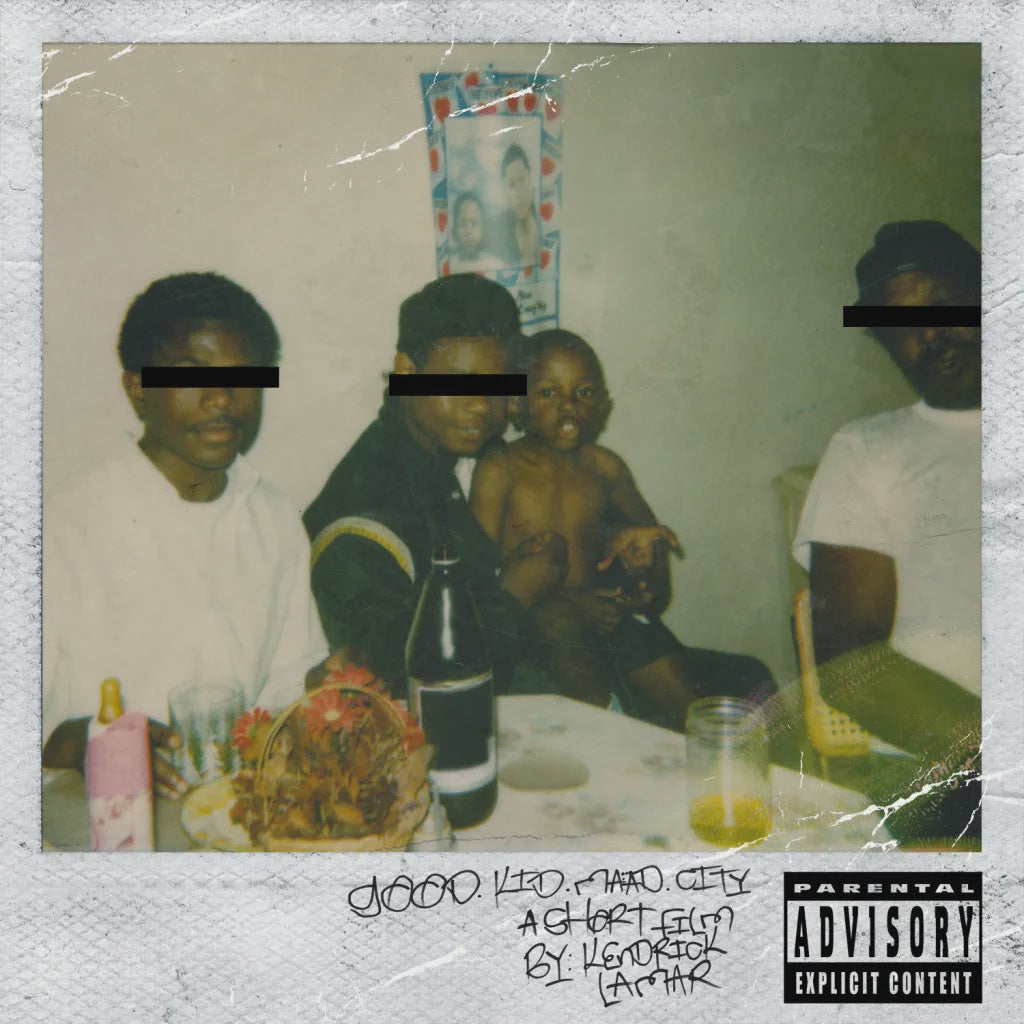
The album was recorded mostly at several studios in California with producers such as Dr. Dre, Just Blaze, Pharrell Williams, Hit-Boy, Scoop DeVille, Jack Splash and T-Minus, among others. Billed as a "short film by Kendrick Lamar" on the album cover, the concept album follows the story of Lamar's teenage experiences in the drug-infested streets and gang lifestyle of his native Compton, California. Good Kid, M.A.A.D City received widespread acclaim from critics, who praised its thematic scope and Lamar's lyrics. Good Kid M.A.A.D City earned Lamar four Grammy Award nominations at the 56th Grammy Awards including Album of the Year.
The album's release was supported by five singles – "The Recipe" featuring Dr. Dre, " ", "Backseat Freestyle", "Poetic Justice" featuring Drake and "Bitch, Don't Kill My Vibe".
Good Kid, M.A.A.D City has a low-key, downbeat production, with atmospheric beats and subtle, indistinct hooks.It eschews contemporary hip hop tastes and generally features tight bass measures, subtle background vocals, and light piano. Writers draw comparisons of the music to OutKast's 1998 album Aquemini.
Andrew Nosnitsky of Spin cites the music's "closest point of reference" as "the cold spaciousness of ATLiens-era OutKast, but as the record progresses, that sound sinks slowly into the fusionist mud of those sprawling and solemn mid-2000s Roots albums." Sasha Frere-Jones of The New Yorker finds its use of "smooth" music as a backdrop for "rough" scenarios to be analogous to Dr. Dre's G-funk during the early 1990s, but adds that "Lamar often sounds like Drake ... whose various dreamy styles have very little to do with the legacy of the West." Okayplayer's Marcus Moore writes that its "expansive and brooding" instrumentals eschew "California's glossy West Coast funk" for a "Dungeon Family aesthetic."
Lamar exhibits a tempered delivery on the album and raps with dense narratives, internal rhyme, double and triple time flow and multiple voices for different characters. Music journalist Jody Rosen characterizes him as "a storyteller, not a braggart or punch-line rapper, setting spiritual yearnings and moral dilemmas against a backdrop of gang violence and police brutality." — (via Wiki)
—
Kendrick Lamar's good kid, m.A.A.d city is fearless and brilliant, an unvarnished and nuanced peek into the rapper's inner life that ties straightforward rap thrills directly to its narrative. — (via Pitchfork)
—
Released 10 years ago this Saturday, the album touched down at a time when rap was divided along now moot fault lines: mixtape versus album, underground versus commercial, web versus radio. Few rappers bridged these worlds, and the ones who did were deeply polarizing.
Listeners immediately and prematurely deemed good kid, m.A.A.d. city a classic on arrival, but 10 years later the assessment stands. Vince Staples' wry anti-gangster rap, J. Cole's anguished survivor's guilt, Chance The Rapper's black boy joy, JID's conscious trap, among other currents, all trace back to Kendrick's intimate yoking of narrator and homeland. He didn't fuck up the game with one verse until 2013, but he proved the viability of a building core audience in an atomized landscape, a dynamic that has intensified in this era of invisible stardom. — (via Stereogum)
↓
Label: Interscope Records
Format: 2 x Vinyl, LP, Album, Reissue, Stereo, 180g, 10th Anniversary Edition
Reissued: 2022 / Originally Released: 2012
Genre: Hip Hop
Style: Conscious
File under: Hip Hop
⦿
Share
Top Dawg / Aftermath / Interscope Records
- Regular price
- $70.00 SGD
- Regular price
-
- Sale price
- $70.00 SGD
- Unit price
- per
Couldn't load pickup availability
About
— The Analog Vault // Essential Listening —
- 10th Anniversary Edition
- 2LP, 180g pressing on black vinyl
—
Good Kid, M.A.A.D City (stylized as good kid, m.A.A.d city) is the second studio album by American rapper Kendrick Lamar. The album was released in 2012 by Top Dawg Entertainment, Aftermath Entertainment, and was distributed by Interscope Records. The album serves as Lamar's major label debut, after his signing to Aftermath and Interscope in early 2012. It was preceded by the release of Kendrick's debut studio album Section.80 (2011), released exclusively through the iTunes Store independently.
The album was recorded mostly at several studios in California with producers such as Dr. Dre, Just Blaze, Pharrell Williams, Hit-Boy, Scoop DeVille, Jack Splash and T-Minus, among others. Billed as a "short film by Kendrick Lamar" on the album cover, the concept album follows the story of Lamar's teenage experiences in the drug-infested streets and gang lifestyle of his native Compton, California. Good Kid, M.A.A.D City received widespread acclaim from critics, who praised its thematic scope and Lamar's lyrics. Good Kid M.A.A.D City earned Lamar four Grammy Award nominations at the 56th Grammy Awards including Album of the Year.
The album's release was supported by five singles – "The Recipe" featuring Dr. Dre, " ", "Backseat Freestyle", "Poetic Justice" featuring Drake and "Bitch, Don't Kill My Vibe".
Good Kid, M.A.A.D City has a low-key, downbeat production, with atmospheric beats and subtle, indistinct hooks.It eschews contemporary hip hop tastes and generally features tight bass measures, subtle background vocals, and light piano. Writers draw comparisons of the music to OutKast's 1998 album Aquemini.
Andrew Nosnitsky of Spin cites the music's "closest point of reference" as "the cold spaciousness of ATLiens-era OutKast, but as the record progresses, that sound sinks slowly into the fusionist mud of those sprawling and solemn mid-2000s Roots albums." Sasha Frere-Jones of The New Yorker finds its use of "smooth" music as a backdrop for "rough" scenarios to be analogous to Dr. Dre's G-funk during the early 1990s, but adds that "Lamar often sounds like Drake ... whose various dreamy styles have very little to do with the legacy of the West." Okayplayer's Marcus Moore writes that its "expansive and brooding" instrumentals eschew "California's glossy West Coast funk" for a "Dungeon Family aesthetic."
Lamar exhibits a tempered delivery on the album and raps with dense narratives, internal rhyme, double and triple time flow and multiple voices for different characters. Music journalist Jody Rosen characterizes him as "a storyteller, not a braggart or punch-line rapper, setting spiritual yearnings and moral dilemmas against a backdrop of gang violence and police brutality." — (via Wiki)
—
Kendrick Lamar's good kid, m.A.A.d city is fearless and brilliant, an unvarnished and nuanced peek into the rapper's inner life that ties straightforward rap thrills directly to its narrative. — (via Pitchfork)
—
Released 10 years ago this Saturday, the album touched down at a time when rap was divided along now moot fault lines: mixtape versus album, underground versus commercial, web versus radio. Few rappers bridged these worlds, and the ones who did were deeply polarizing.
Listeners immediately and prematurely deemed good kid, m.A.A.d. city a classic on arrival, but 10 years later the assessment stands. Vince Staples' wry anti-gangster rap, J. Cole's anguished survivor's guilt, Chance The Rapper's black boy joy, JID's conscious trap, among other currents, all trace back to Kendrick's intimate yoking of narrator and homeland. He didn't fuck up the game with one verse until 2013, but he proved the viability of a building core audience in an atomized landscape, a dynamic that has intensified in this era of invisible stardom. — (via Stereogum)
↓
Label: Interscope Records
Format: 2 x Vinyl, LP, Album, Reissue, Stereo, 180g, 10th Anniversary Edition
Reissued: 2022 / Originally Released: 2012
Genre: Hip Hop
Style: Conscious
File under: Hip Hop
⦿
Share
- Choosing a selection results in a full page refresh.