


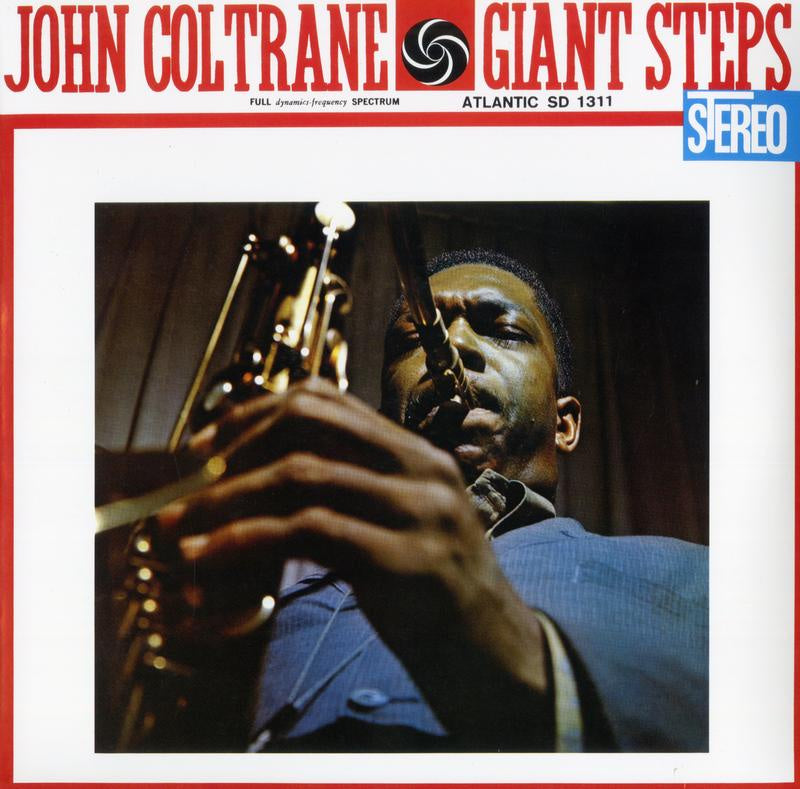
John Coltrane Giant Steps (Rhino Reserve)
-
Regular price
-
$55.00 SGD
-
Regular price
-
-
Sale price
-
$55.00 SGD
- Unit price
-
per
Couldn't load pickup availability
About
A game-changer in jazz, Giant Steps marked John Coltrane’s legendary Atlantic Records debut, featuring some of his most iconic compositions——including the groundbreaking title track “Giant Steps” and the soulful “Naima."
Now pressed locally on 180-gram premium-quality vinyl at Fidelity Record Pressing's new plant in Oxnard, California, as part of Rhino’s exclusive Rhino Reserve line.
—
History will undoubtedly enshrine this album as a watershed the likes of which may never truly be appreciated. Giant Steps bore the double-edged sword of furthering the cause of the music as well as delivering it to an increasingly mainstream audience. Although this was John Coltrane's debut for Atlantic, he was concurrently performing and recording with Miles Davis. Within the space of less than three weeks, Coltrane would complete his work with Davis and company on another genre-defining LP, Kind of Blue, before commencing his efforts on this one.
Coltrane (tenor sax) is flanked by essentially two different trios. Recording commenced in early May of 1959 with a pair of sessions that featured Tommy Flanagan (piano) and Art Taylor (drums), as well as Paul Chambers - who was the only bandmember other than Coltrane to have performed on every date. When recording resumed in December of that year, Wynton Kelly (piano) and Jimmy Cobb (drums) were instated - replicating the alternate non-Bill Evans lineup featured on "Freddie the Freeloader" on Kind of Blue, sans Miles Davis of course.
At the heart of these recordings, however, is the laser-beam focus of Coltrane's tenor solos. All seven pieces issued on the original Giant Steps are likewise Coltrane compositions. He was, in essence, beginning to rewrite the jazz canon with material that would be centered on solos - the 180-degree antithesis of the art form up to that point. These arrangements would create a place for the solo to become infinitely more compelling. This would culminate in a frenetic performance style that noted jazz journalist Ira Gitler accurately dubbed "sheets of sound." Coltrane's polytonal torrents extricate the amicable and otherwise cordial solos that had begun decaying the very exigency of the genre - turning it into the equivalent of easy listening.
He wastes no time as the album's title track immediately indicates a progression from which there would be no looking back. Line upon line of highly cerebral improvisation snake between the melody and solos, practically fusing the two. The resolute intensity of "Countdown" does more to modernize jazz in 141 seconds than many artists do in their entire careers. Tellingly, the contrasting and ultimately pastoral "Naima" was the last tune to be recorded, and is the only track on the original long-player to feature the Kelly-version of the Kind of Blue quartet. What is lost in tempo is more than recouped in intrinsic melodic beauty. — (via AllMusic)
—
If John Coltrane had only recorded the Giant Steps album, he would still be well known today as a very original tenor-saxophonist and composer. Mostly recorded during May 4-5, 1959, the seven Coltrane originals that comprise Giant Steps both summed up the bebop legacy of the past 15 years and looked ahead to the next 15. The 33-year old musician, who had been virtually unknown four years earlier, was ready to claim his place as the leader of jazz.
A drug habit resulted in him being fired by Miles Davis but ‘Trane soon permanently rid himself of that addiction, leading to his musical growth during 1957-58 accelerating. 1957 found him spending a few months as a member of the Thelonious Monk Quartet and recording his first universally acclaimed gem, Blue Train.
By then his sound and style on tenor were completely original, not sounding at all like his historic predecessors Coleman Hawkins, Lester Young, and Ben Webster, or his early influence Dexter Gordon. Coltrane was instantly recognizable within two notes while at the same time developing his own fresh and adventurous way of improvising. Dubbed “sheets of sound” by journalist Ira Gitler, Coltrane thought in terms of clusters of notes rather than individual ones and his solos could excite or annoy listeners who were accustomed to hearing more relaxed and accessible players.
On Mar. 2 and April 22, 1959, Coltrane recorded the highly influential Kind Of Blue album with Miles Davis. Most significant of the five songs for the saxophonist was “So What,” a piece that only utilized two chords. Coltrane would use the same idea for his “Impressions” a few years later.
During May 4-5, just 12 days after the second part of Kind Of Blue was recorded, John Coltrane recorded most of Giant Steps, his debut album for the Atlantic label. Unlike on his many Prestige sessions, Coltrane wrote all seven compositions. That Mar. 26 he had a session with pianist Cedar Walton, bassist Paul Chambers and drummer Lex Humphries that included multiple versions of three of the songs. But he was not happy with the results and those performances were not released until decades later. For the actual Giant Steps album, Coltrane was joined by Chambers, pianist Tommy Flanagan, and drummer Art Taylor. — (via Mosaic Records)
Vinyl tracklist:
A1 Giant Steps
A2 Cousin Mary
A3 Countdown
A4 Spiral
B1 Syeeda's Song Flute
B2 Naima
B3 Mr. P. C.
↓
Label: Rhino Records, Atlantic
Series: Rhino Reserve
Format: Vinyl, LP, Album, Reissue, Stereo, 180g
Reissued: 2025 / Original: 1960
Genre: Jazz
Style: Hard Bop
File under: Jazz
⦿
Share
- Regular price
- $55.00 SGD
- Regular price
-
- Sale price
- $55.00 SGD
- Unit price
- per
Couldn't load pickup availability
About
A game-changer in jazz, Giant Steps marked John Coltrane’s legendary Atlantic Records debut, featuring some of his most iconic compositions——including the groundbreaking title track “Giant Steps” and the soulful “Naima."
Now pressed locally on 180-gram premium-quality vinyl at Fidelity Record Pressing's new plant in Oxnard, California, as part of Rhino’s exclusive Rhino Reserve line.
—
History will undoubtedly enshrine this album as a watershed the likes of which may never truly be appreciated. Giant Steps bore the double-edged sword of furthering the cause of the music as well as delivering it to an increasingly mainstream audience. Although this was John Coltrane's debut for Atlantic, he was concurrently performing and recording with Miles Davis. Within the space of less than three weeks, Coltrane would complete his work with Davis and company on another genre-defining LP, Kind of Blue, before commencing his efforts on this one.
Coltrane (tenor sax) is flanked by essentially two different trios. Recording commenced in early May of 1959 with a pair of sessions that featured Tommy Flanagan (piano) and Art Taylor (drums), as well as Paul Chambers - who was the only bandmember other than Coltrane to have performed on every date. When recording resumed in December of that year, Wynton Kelly (piano) and Jimmy Cobb (drums) were instated - replicating the alternate non-Bill Evans lineup featured on "Freddie the Freeloader" on Kind of Blue, sans Miles Davis of course.
At the heart of these recordings, however, is the laser-beam focus of Coltrane's tenor solos. All seven pieces issued on the original Giant Steps are likewise Coltrane compositions. He was, in essence, beginning to rewrite the jazz canon with material that would be centered on solos - the 180-degree antithesis of the art form up to that point. These arrangements would create a place for the solo to become infinitely more compelling. This would culminate in a frenetic performance style that noted jazz journalist Ira Gitler accurately dubbed "sheets of sound." Coltrane's polytonal torrents extricate the amicable and otherwise cordial solos that had begun decaying the very exigency of the genre - turning it into the equivalent of easy listening.
He wastes no time as the album's title track immediately indicates a progression from which there would be no looking back. Line upon line of highly cerebral improvisation snake between the melody and solos, practically fusing the two. The resolute intensity of "Countdown" does more to modernize jazz in 141 seconds than many artists do in their entire careers. Tellingly, the contrasting and ultimately pastoral "Naima" was the last tune to be recorded, and is the only track on the original long-player to feature the Kelly-version of the Kind of Blue quartet. What is lost in tempo is more than recouped in intrinsic melodic beauty. — (via AllMusic)
—
If John Coltrane had only recorded the Giant Steps album, he would still be well known today as a very original tenor-saxophonist and composer. Mostly recorded during May 4-5, 1959, the seven Coltrane originals that comprise Giant Steps both summed up the bebop legacy of the past 15 years and looked ahead to the next 15. The 33-year old musician, who had been virtually unknown four years earlier, was ready to claim his place as the leader of jazz.
A drug habit resulted in him being fired by Miles Davis but ‘Trane soon permanently rid himself of that addiction, leading to his musical growth during 1957-58 accelerating. 1957 found him spending a few months as a member of the Thelonious Monk Quartet and recording his first universally acclaimed gem, Blue Train.
By then his sound and style on tenor were completely original, not sounding at all like his historic predecessors Coleman Hawkins, Lester Young, and Ben Webster, or his early influence Dexter Gordon. Coltrane was instantly recognizable within two notes while at the same time developing his own fresh and adventurous way of improvising. Dubbed “sheets of sound” by journalist Ira Gitler, Coltrane thought in terms of clusters of notes rather than individual ones and his solos could excite or annoy listeners who were accustomed to hearing more relaxed and accessible players.
On Mar. 2 and April 22, 1959, Coltrane recorded the highly influential Kind Of Blue album with Miles Davis. Most significant of the five songs for the saxophonist was “So What,” a piece that only utilized two chords. Coltrane would use the same idea for his “Impressions” a few years later.
During May 4-5, just 12 days after the second part of Kind Of Blue was recorded, John Coltrane recorded most of Giant Steps, his debut album for the Atlantic label. Unlike on his many Prestige sessions, Coltrane wrote all seven compositions. That Mar. 26 he had a session with pianist Cedar Walton, bassist Paul Chambers and drummer Lex Humphries that included multiple versions of three of the songs. But he was not happy with the results and those performances were not released until decades later. For the actual Giant Steps album, Coltrane was joined by Chambers, pianist Tommy Flanagan, and drummer Art Taylor. — (via Mosaic Records)
Vinyl tracklist:
A1 Giant Steps
A2 Cousin Mary
A3 Countdown
A4 Spiral
B1 Syeeda's Song Flute
B2 Naima
B3 Mr. P. C.
↓
Label: Rhino Records, Atlantic
Series: Rhino Reserve
Format: Vinyl, LP, Album, Reissue, Stereo, 180g
Reissued: 2025 / Original: 1960
Genre: Jazz
Style: Hard Bop
File under: Jazz
⦿
Share
- Choosing a selection results in a full page refresh.