


Dominik Eulberg Lepidoptera
-
Regular price
-
$60.00 SGD
-
Regular price
-
-
Sale price
-
$60.00 SGD
- Unit price
-
per
Couldn't load pickup availability
About
Lepidoptera—the scientific name for butterflies, meaning “scale-winged”—is also the title of the seventh studio album by renowned music producer, bestselling author, ecologist, and knowledge mediator Dominik Eulberg. More than just an album, Lepidoptera is an artistic manifesto: a celebration of butterfly diversity and a profound ecological statement.
Eulberg’s fascination with butterflies began in early childhood and has since become a lifelong passion. Set for release in October 2025, via !K7 Records, Lepidoptera blends his signature sound with an urgent ecological message. It marks the pinnacle of a music career spanning over three decades.
Drawing from years of experience as a producer and DJ, Eulberg presents his most technically ambitious work yet. At the same time, he describes this album as his freest: “I simply made the music as it came out of me—without concern for club suitability or genre boundaries.”
The result is a richly textured and immersive journey that moves fluidly between pulsating, danceable rhythms, ambient soundscapes, and orchestral flourishes. Filmmaker Jan Haft calls it “a dazzling marriage of retro and avant-garde.” Throughout, the album remains unmistakably “Eulbergian,” showcasing an artist who has continuously refined his own distinctive musical language.
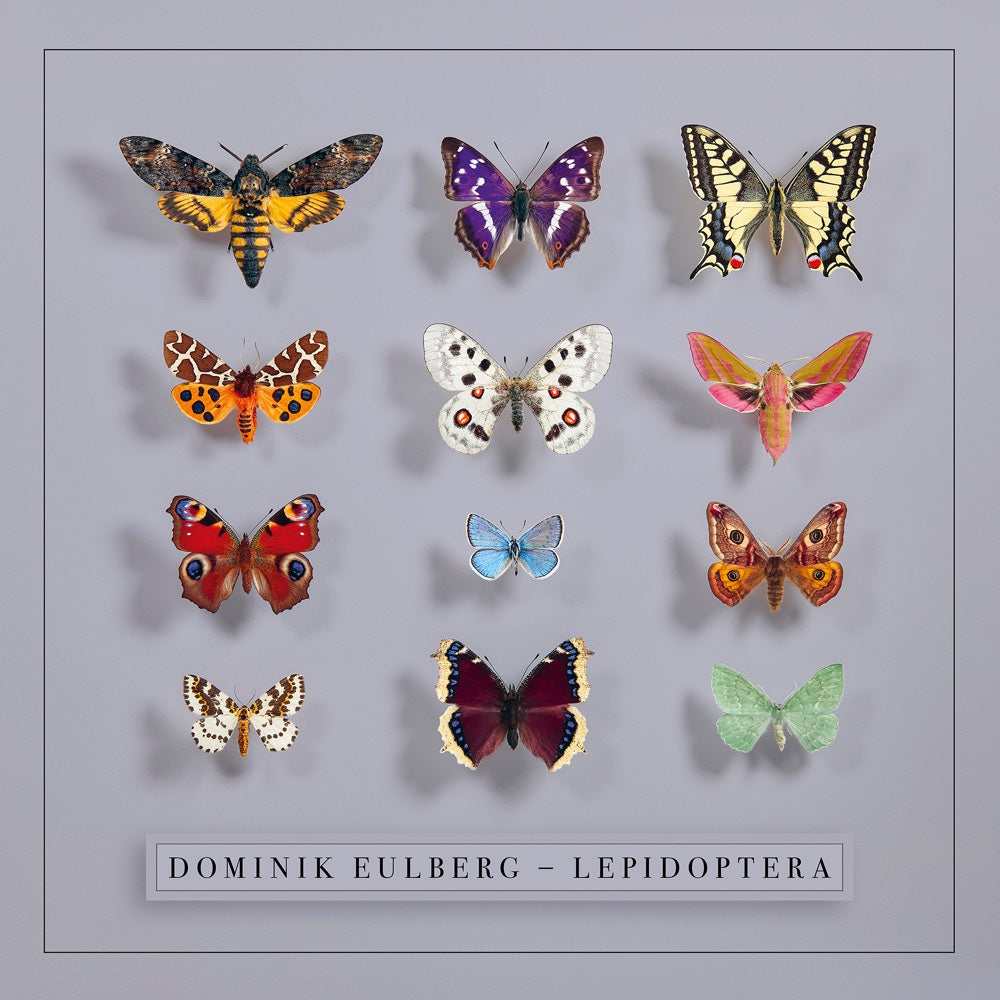
At the heart of Lepidoptera are twelve native butterfly species, handpicked by Eulberg from the 3,700 known species in his homeland. Each track is inspired by one species, shaping the album's structure and grounding its creative focus.“Making music is really about choosing from endless possibilities,” Eulberg says. “Without a clear concept, you can easily drown in them.”
To bring authenticity to the project, Eulberg immersed himself in the lives of butterflies—studying their biology, observing them in the wild, and even breeding several species at home alongside his wife, Natalia. He views butterflies as a “poetic metaphor for life,” capable of stirring deep emotional resonance. Each composition musically interprets the behavior and life cycle of its corresponding species.
But Lepidoptera goes far beyond music. Eulberg intends it as a multimedia educational tool, using sound as a gateway to emotional engagement with science and nature. “Music is a joyful, low-barrier tool for sensitization,” he explains. “Science provides facts, but it often only reaches the mind. Emotions touch the soul—they inspire curiosity, wonder, and compassion, the true drivers of change.”
To this end, the album is accompanied by videos (including work from Jan Haft), interactive games, and visual art. The album cover functions as an “educational display,” featuring illustrations by Nikolas Kuhlen depicting all twelve butterfly species across all four life stages: egg, caterpillar, pupa, and imago. “It helps people visualize the miracle of metamorphosis and rekindle their love for nature,” Eulberg says.
Looking ahead, Eulberg is reimagining the traditional release tour. Instead of club performances, he’s planning an educational tour in collaboration with artists and scientists. He will visit environmental education centers, host talks, and offer workshops for both children and adults. The aim: to ignite fascination for local biodiversity and foster a deeper connection to nature. “Happy people who love nature don’t start wars,” he concludes. — (via Label)
—
A few years ago, Dominik Eulberg released the magnificent Mannigfaltig, a celebration of fauna available with a boxed memory game. This year the artist ups the ante significantly. Lepidoptera began with the study and breeding of butterflies, and the choice of twelve subjects to represent the 3700 known species in Germany. Then the LP, with divine liner notes, soon to be joined by videos and interactive games. Finally, the project will go on tour, but not a traditional tour; instead; Eulberg hopes to join artists and scientists on an educational tour, melding music, science and art, an original and laudable concept.
Sadness and wonder mingle as the album begins. The first subject, the small emperor moth, is born without a mouth and lives only on the reserves earlier stored as a caterpillar. It emerges, flies, mates and dies in only a few days. The early percussion sounds like the munching of a caterpillar gathering its stores, the late percussion like a ticking clock.
“Grosser Schillerfalter” (an early single) is cheerful and upbeat, reflecting the iridescence of the male purple emperor butterfly. The mood shifts in “Brauner Bär”, whose dark synth patterns and mysterious atmosphere honor a butterfly that flies only after midnight. Brighter notes surface in the sixth minute, but only temporarily.
The large emerald is a master of camouflage both as caterpillar (when it resembles a twig) and as moth (when it resembles a leaf). In “Grünes Blatt,”the synth patterns blend and mesh like green on green. One can hear the danger in the low march of the drums, and the relief of being passed over in the slowly-rising scales. The swallowtail tricks pursuers into eating its detachable parts while it flies away. “Schwalbenschwanz” seems playful, as if the butterfly is laughing at its pursuers. The breakdown at the four-minute mark is like the moment it breaks free, having shed part of its body, its spirit intact.
In contrast to the emperor moth, the morning cloak butterfly can live up to a year. “Trauermantel” starts slowly and takes its time, an uncommon respite, as if the creature is the turtle of butterflies; but eventually, and literally, creature and the track get their wings. If “Wundklee-Bläuling” seems like one of the warmer tracks, it’s because the piece honors the surprising relationship between the turquoise blue butterfly in its caterpillar stage and certain colonies of ants. If ants and caterpillars can get along, why can’t we? The ambient touches at the beginning and end connote interspecies peace. With Halloween approaching, it’s no surprise that the death’s head moth is included; yet “Totenkopfschwärmer” is not a scary track, quite the opposite. The catchy rhythms and subtle breakdowns suggest the long flight the moth makes, often traversing the Alps.
Lepidoptera is an album of stories turned into song. The final piece, which honors the peacock butterfly, sounds like a music box, connecting it with the wonder of childhood. Through Eulberg’s writings, we learn of butterflies who emit hisses and whistles, caterpillars who retract their eyes, species who can smell potential mates from kilometers away. We gain an appreciation for this remarkable family of creatures, formerly known only for their transformation; as a result, our lives are enriched as well. — (via Richard Allen / A Closer Listen)
↓
Label: !K7 Records
Format: 2 x Vinyl, LP, Album
Released: 2025
Genre: Electronic
Style: Ambient, Minimal
File under: Electronic // Ambient / Experimental / IDM
Share
- Regular price
- $60.00 SGD
- Regular price
-
- Sale price
- $60.00 SGD
- Unit price
- per
Couldn't load pickup availability
About
Lepidoptera—the scientific name for butterflies, meaning “scale-winged”—is also the title of the seventh studio album by renowned music producer, bestselling author, ecologist, and knowledge mediator Dominik Eulberg. More than just an album, Lepidoptera is an artistic manifesto: a celebration of butterfly diversity and a profound ecological statement.
Eulberg’s fascination with butterflies began in early childhood and has since become a lifelong passion. Set for release in October 2025, via !K7 Records, Lepidoptera blends his signature sound with an urgent ecological message. It marks the pinnacle of a music career spanning over three decades.
Drawing from years of experience as a producer and DJ, Eulberg presents his most technically ambitious work yet. At the same time, he describes this album as his freest: “I simply made the music as it came out of me—without concern for club suitability or genre boundaries.”
The result is a richly textured and immersive journey that moves fluidly between pulsating, danceable rhythms, ambient soundscapes, and orchestral flourishes. Filmmaker Jan Haft calls it “a dazzling marriage of retro and avant-garde.” Throughout, the album remains unmistakably “Eulbergian,” showcasing an artist who has continuously refined his own distinctive musical language.
At the heart of Lepidoptera are twelve native butterfly species, handpicked by Eulberg from the 3,700 known species in his homeland. Each track is inspired by one species, shaping the album's structure and grounding its creative focus.“Making music is really about choosing from endless possibilities,” Eulberg says. “Without a clear concept, you can easily drown in them.”
To bring authenticity to the project, Eulberg immersed himself in the lives of butterflies—studying their biology, observing them in the wild, and even breeding several species at home alongside his wife, Natalia. He views butterflies as a “poetic metaphor for life,” capable of stirring deep emotional resonance. Each composition musically interprets the behavior and life cycle of its corresponding species.
But Lepidoptera goes far beyond music. Eulberg intends it as a multimedia educational tool, using sound as a gateway to emotional engagement with science and nature. “Music is a joyful, low-barrier tool for sensitization,” he explains. “Science provides facts, but it often only reaches the mind. Emotions touch the soul—they inspire curiosity, wonder, and compassion, the true drivers of change.”
To this end, the album is accompanied by videos (including work from Jan Haft), interactive games, and visual art. The album cover functions as an “educational display,” featuring illustrations by Nikolas Kuhlen depicting all twelve butterfly species across all four life stages: egg, caterpillar, pupa, and imago. “It helps people visualize the miracle of metamorphosis and rekindle their love for nature,” Eulberg says.
Looking ahead, Eulberg is reimagining the traditional release tour. Instead of club performances, he’s planning an educational tour in collaboration with artists and scientists. He will visit environmental education centers, host talks, and offer workshops for both children and adults. The aim: to ignite fascination for local biodiversity and foster a deeper connection to nature. “Happy people who love nature don’t start wars,” he concludes. — (via Label)
—
A few years ago, Dominik Eulberg released the magnificent Mannigfaltig, a celebration of fauna available with a boxed memory game. This year the artist ups the ante significantly. Lepidoptera began with the study and breeding of butterflies, and the choice of twelve subjects to represent the 3700 known species in Germany. Then the LP, with divine liner notes, soon to be joined by videos and interactive games. Finally, the project will go on tour, but not a traditional tour; instead; Eulberg hopes to join artists and scientists on an educational tour, melding music, science and art, an original and laudable concept.
Sadness and wonder mingle as the album begins. The first subject, the small emperor moth, is born without a mouth and lives only on the reserves earlier stored as a caterpillar. It emerges, flies, mates and dies in only a few days. The early percussion sounds like the munching of a caterpillar gathering its stores, the late percussion like a ticking clock.
“Grosser Schillerfalter” (an early single) is cheerful and upbeat, reflecting the iridescence of the male purple emperor butterfly. The mood shifts in “Brauner Bär”, whose dark synth patterns and mysterious atmosphere honor a butterfly that flies only after midnight. Brighter notes surface in the sixth minute, but only temporarily.
The large emerald is a master of camouflage both as caterpillar (when it resembles a twig) and as moth (when it resembles a leaf). In “Grünes Blatt,”the synth patterns blend and mesh like green on green. One can hear the danger in the low march of the drums, and the relief of being passed over in the slowly-rising scales. The swallowtail tricks pursuers into eating its detachable parts while it flies away. “Schwalbenschwanz” seems playful, as if the butterfly is laughing at its pursuers. The breakdown at the four-minute mark is like the moment it breaks free, having shed part of its body, its spirit intact.
In contrast to the emperor moth, the morning cloak butterfly can live up to a year. “Trauermantel” starts slowly and takes its time, an uncommon respite, as if the creature is the turtle of butterflies; but eventually, and literally, creature and the track get their wings. If “Wundklee-Bläuling” seems like one of the warmer tracks, it’s because the piece honors the surprising relationship between the turquoise blue butterfly in its caterpillar stage and certain colonies of ants. If ants and caterpillars can get along, why can’t we? The ambient touches at the beginning and end connote interspecies peace. With Halloween approaching, it’s no surprise that the death’s head moth is included; yet “Totenkopfschwärmer” is not a scary track, quite the opposite. The catchy rhythms and subtle breakdowns suggest the long flight the moth makes, often traversing the Alps.
Lepidoptera is an album of stories turned into song. The final piece, which honors the peacock butterfly, sounds like a music box, connecting it with the wonder of childhood. Through Eulberg’s writings, we learn of butterflies who emit hisses and whistles, caterpillars who retract their eyes, species who can smell potential mates from kilometers away. We gain an appreciation for this remarkable family of creatures, formerly known only for their transformation; as a result, our lives are enriched as well. — (via Richard Allen / A Closer Listen)
↓
Label: !K7 Records
Format: 2 x Vinyl, LP, Album
Released: 2025
Genre: Electronic
Style: Ambient, Minimal
File under: Electronic // Ambient / Experimental / IDM
Share
- Choosing a selection results in a full page refresh.