


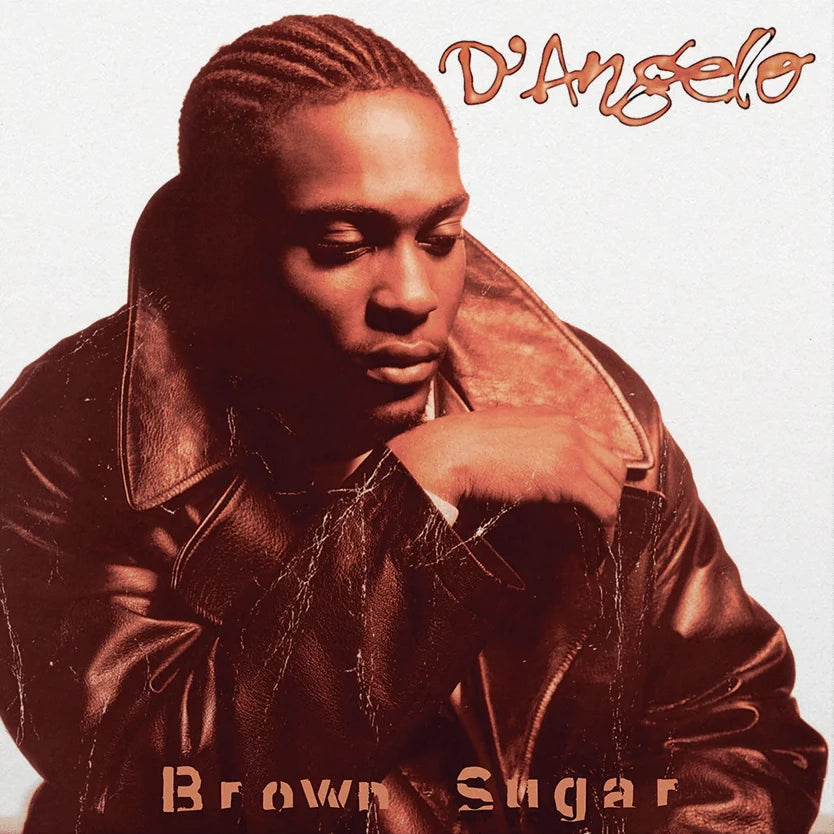
D'Angelo Brown Sugar
-
Regular price
-
$60.00 SGD
-
Regular price
-
-
Sale price
-
$60.00 SGD
- Unit price
-
per
Couldn't load pickup availability
About
D'Angelo established himself as an unwitting founder and leading light of the late-'90s neo-soul movement, which aimed to bring the organic flavor of classic R&B back to the hip-hop age. Modeling himself on the likes of Marvin Gaye, Prince, Curtis Mayfield, and Al Green, D'Angelo exhibited his inspirations not only with his vocal style – albeit with a stoned yet emotive twist all his own but also wrote his own material, and frequently produced it, helping to revive the concept of the all-purpose R&B auteur. His first album, Brown Sugar (1995), gradually earned him an audience so devoted that the looser and rhythmically richer follow-up, Voodoo (2000), debuted at number one despite a gap of almost five years, and won that year's Grammy for Best R&B Album. A wait of nearly three times that length preceded the release of the bristlier Black Messiah (2014), a Top Five hit that made D'Angelo a two-time Best R&B Album winner.
By the mid-'90s, most urban R&B had become rather predictable, working on similar combinations of soul and hip-hop, or relying on vocal theatrics on slow, seductive numbers. With his debut album, Brown Sugar, the 21-year-old D'Angelo crashed down some of those barriers. D'Angelo concentrates on classic versions of soul and R&B, but unlike most of his contemporaries, he doesn't cut and paste older songs with hip-hop beats; instead, he attacks the forms with a hip-hop attitude, breathing new life into traditional forms.
Not all of his music works, there are several songs that sound incomplete, relying more on sound than structure. But when he does have a good song - like the hit "Brown Sugar," Smokey Robinson's "Cruisin'," or the bluesy "Shit, Damn, M*th*rf***er," among several others — D'Angelo's wild talents are evident. One of the most exciting debuts of 1995, giving a good sense of how deep D'Angelo's talents run. — (via AllMusic)
—
After Motown, Chess, Stax and other pioneering soul music labels faded in the late 70s – their sound replaced by disco, synthpop, new jack swing and other genres that focused more on electronic arrangements – “rhythm and blues” sometimes felt less a musical genre and more a catch-all idiom for pop records sung by Black artists. Michael Jackson, Luther Vandross, Mariah Carey and others became MTV stars by incorporating elements of classic soul into their modern sounds. Later, hip-hop and contemporary R&B cross pollinated into a hybrid that invaded the charts. These were different kinds of golden eras and, by 1995, it felt like certain ideals of the 60s and 70s could forever be marginalised.
A romantic response came with a movement that put the tenets of throwback funk, muddy blues, blue note jazz, divine gospel and jukebox soul to its forefront. The creators have tended to reject the expression “neo soul”, as artists who get lumped into blanket phrases often do. But there was definitely something going on in the mid-to-late 90s as Maxwell, Erykah Badu, Macy Gray and plenty more emerged with music so sultry, popping in an earphone felt like a straight-up lustful act. But before all of them, there was D’Angelo’s Brown Sugar – a raw, silky, erotic classic that helped spark the new ethos.
Just out of his teens when he recorded his debut record, D’Angelo – real name Michael Archer, the son of a preacher man – surrounded himself with equally funky creatives like Ali Shaheed Muhammad, Raphael Saadiq and music producer Bob Power. The result is an LP that sounds like it was cut in the dead of night by bugged-out geniuses; you can almost hear the sound of weed smoke blowing from the speakers and the creative spirits of Al Green, Sly Stone, Marvin Gaye and Prince circling overhead. Like The Purple One, there was an aura surrounding D’Angelo. In real life, he was shy, difficult to read, more mystic than man. Unlike Prince, his powerlessness to create the body of work his genius demanded became the stuff of legend as he spent years struggling with his demons.
The D’Angelo mythos starts on the jazzy opening chords of the title track. D’s impossibly high falsetto rings with a carnal sensuality as he croons about sex or weed or maybe both. He sounds equally stoned and surly on "Jonz in My Bonz", allowing his funky fingers to run over his organ as the beat summons the dusty sounds of New York hip-hop. Like most numbers on Brown Sugar, the song has a free-spirited feel, as though the whole record was laid down on analogue tape during the most perfect late night jam session that the gods and goddesses ever bore witness to.
D’Angelo’s Christian roots stir on the gospel opening of "Me and Those Dreamin’ Eyes of Mine" and sanctified closer "Higher", while there’s an underground jazz club feel to the plucked double bass and tinkling piano of tap-along classic "When We Get By". It’s not all saintly: D gets nasty on "Shit, Damn, Motherfucker", calling out the dude his wife’s been creeping with. “I’m ‘bout to go get my nine/ And kill both of y’all behind,” he threatens, a whole six years before Ronald Isley gained significant pop culture traction by playing a similar role in The Isley Brothers’ "Contagious". Brown Sugar’s own songs for the radio come in the form of a lustrous cover of Smokey Robinson’s "Crusin’" and "Lady", a pretty pop track D’Angelo supposedly hated. That was, until fans started telling him their kids had been conceived to it.
This aversion to "Lady" probably stemmed from the simplicity of its structure, and D’Angelo’s hunger to experiment with arrangements would manifest on the darkly hypnotic psych-funk album Voodoo five years later. In the process, he dumped the oversized leather jacket and pudgy-cheeked look for a more overtly sexualised styling. His unhappiness with the image almost buried the singer as he collapsed into substances and depression. A 14-year album drought was finally broken in 2014 when D’Angelo dropped Black Messiah with band The Vanguard, another instant classic. All the while neo soul lived on through Bilal, Musiq Soulchild, India.Arie, Eric Roberson and Alicia Keys, offering a raw, lustful alternative to the sensibilities of most contemporary R&B. And so Brown Sugar helped start a musical moment. Twenty-five years later, it still feels out of step, out of time, eternally innovative, and just as gorgeous as it did on first rotation. — (via Crack Magazine)
↓
Label: Virgin, UMe
Format: 2 x Vinyl, LP, Album, Reissue, Stereo
Reissued: 2015 / Original Release: 1995
Genre: Funk / Soul
Style: Soul, Neo Soul, Contemporary R&B
File under: Contemporary R&B
⦿
Share
- Regular price
- $60.00 SGD
- Regular price
-
- Sale price
- $60.00 SGD
- Unit price
- per
Couldn't load pickup availability
About
D'Angelo established himself as an unwitting founder and leading light of the late-'90s neo-soul movement, which aimed to bring the organic flavor of classic R&B back to the hip-hop age. Modeling himself on the likes of Marvin Gaye, Prince, Curtis Mayfield, and Al Green, D'Angelo exhibited his inspirations not only with his vocal style – albeit with a stoned yet emotive twist all his own but also wrote his own material, and frequently produced it, helping to revive the concept of the all-purpose R&B auteur. His first album, Brown Sugar (1995), gradually earned him an audience so devoted that the looser and rhythmically richer follow-up, Voodoo (2000), debuted at number one despite a gap of almost five years, and won that year's Grammy for Best R&B Album. A wait of nearly three times that length preceded the release of the bristlier Black Messiah (2014), a Top Five hit that made D'Angelo a two-time Best R&B Album winner.
By the mid-'90s, most urban R&B had become rather predictable, working on similar combinations of soul and hip-hop, or relying on vocal theatrics on slow, seductive numbers. With his debut album, Brown Sugar, the 21-year-old D'Angelo crashed down some of those barriers. D'Angelo concentrates on classic versions of soul and R&B, but unlike most of his contemporaries, he doesn't cut and paste older songs with hip-hop beats; instead, he attacks the forms with a hip-hop attitude, breathing new life into traditional forms.
Not all of his music works, there are several songs that sound incomplete, relying more on sound than structure. But when he does have a good song - like the hit "Brown Sugar," Smokey Robinson's "Cruisin'," or the bluesy "Shit, Damn, M*th*rf***er," among several others — D'Angelo's wild talents are evident. One of the most exciting debuts of 1995, giving a good sense of how deep D'Angelo's talents run. — (via AllMusic)
—
After Motown, Chess, Stax and other pioneering soul music labels faded in the late 70s – their sound replaced by disco, synthpop, new jack swing and other genres that focused more on electronic arrangements – “rhythm and blues” sometimes felt less a musical genre and more a catch-all idiom for pop records sung by Black artists. Michael Jackson, Luther Vandross, Mariah Carey and others became MTV stars by incorporating elements of classic soul into their modern sounds. Later, hip-hop and contemporary R&B cross pollinated into a hybrid that invaded the charts. These were different kinds of golden eras and, by 1995, it felt like certain ideals of the 60s and 70s could forever be marginalised.
A romantic response came with a movement that put the tenets of throwback funk, muddy blues, blue note jazz, divine gospel and jukebox soul to its forefront. The creators have tended to reject the expression “neo soul”, as artists who get lumped into blanket phrases often do. But there was definitely something going on in the mid-to-late 90s as Maxwell, Erykah Badu, Macy Gray and plenty more emerged with music so sultry, popping in an earphone felt like a straight-up lustful act. But before all of them, there was D’Angelo’s Brown Sugar – a raw, silky, erotic classic that helped spark the new ethos.
Just out of his teens when he recorded his debut record, D’Angelo – real name Michael Archer, the son of a preacher man – surrounded himself with equally funky creatives like Ali Shaheed Muhammad, Raphael Saadiq and music producer Bob Power. The result is an LP that sounds like it was cut in the dead of night by bugged-out geniuses; you can almost hear the sound of weed smoke blowing from the speakers and the creative spirits of Al Green, Sly Stone, Marvin Gaye and Prince circling overhead. Like The Purple One, there was an aura surrounding D’Angelo. In real life, he was shy, difficult to read, more mystic than man. Unlike Prince, his powerlessness to create the body of work his genius demanded became the stuff of legend as he spent years struggling with his demons.
The D’Angelo mythos starts on the jazzy opening chords of the title track. D’s impossibly high falsetto rings with a carnal sensuality as he croons about sex or weed or maybe both. He sounds equally stoned and surly on "Jonz in My Bonz", allowing his funky fingers to run over his organ as the beat summons the dusty sounds of New York hip-hop. Like most numbers on Brown Sugar, the song has a free-spirited feel, as though the whole record was laid down on analogue tape during the most perfect late night jam session that the gods and goddesses ever bore witness to.
D’Angelo’s Christian roots stir on the gospel opening of "Me and Those Dreamin’ Eyes of Mine" and sanctified closer "Higher", while there’s an underground jazz club feel to the plucked double bass and tinkling piano of tap-along classic "When We Get By". It’s not all saintly: D gets nasty on "Shit, Damn, Motherfucker", calling out the dude his wife’s been creeping with. “I’m ‘bout to go get my nine/ And kill both of y’all behind,” he threatens, a whole six years before Ronald Isley gained significant pop culture traction by playing a similar role in The Isley Brothers’ "Contagious". Brown Sugar’s own songs for the radio come in the form of a lustrous cover of Smokey Robinson’s "Crusin’" and "Lady", a pretty pop track D’Angelo supposedly hated. That was, until fans started telling him their kids had been conceived to it.
This aversion to "Lady" probably stemmed from the simplicity of its structure, and D’Angelo’s hunger to experiment with arrangements would manifest on the darkly hypnotic psych-funk album Voodoo five years later. In the process, he dumped the oversized leather jacket and pudgy-cheeked look for a more overtly sexualised styling. His unhappiness with the image almost buried the singer as he collapsed into substances and depression. A 14-year album drought was finally broken in 2014 when D’Angelo dropped Black Messiah with band The Vanguard, another instant classic. All the while neo soul lived on through Bilal, Musiq Soulchild, India.Arie, Eric Roberson and Alicia Keys, offering a raw, lustful alternative to the sensibilities of most contemporary R&B. And so Brown Sugar helped start a musical moment. Twenty-five years later, it still feels out of step, out of time, eternally innovative, and just as gorgeous as it did on first rotation. — (via Crack Magazine)
↓
Label: Virgin, UMe
Format: 2 x Vinyl, LP, Album, Reissue, Stereo
Reissued: 2015 / Original Release: 1995
Genre: Funk / Soul
Style: Soul, Neo Soul, Contemporary R&B
File under: Contemporary R&B
⦿
Share
- Choosing a selection results in a full page refresh.