


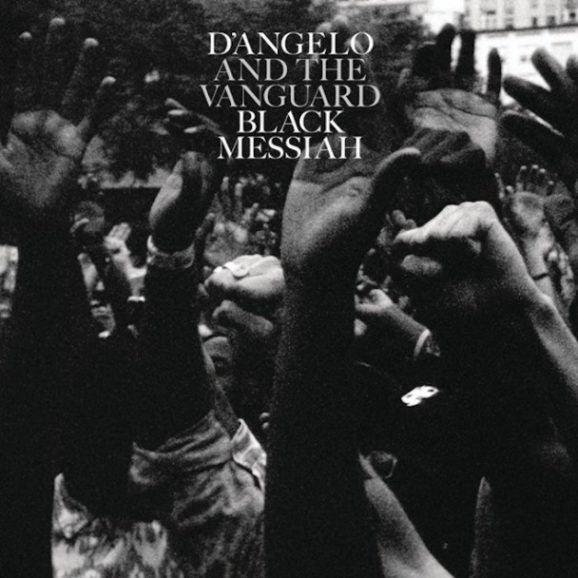
D'Angelo And The Vanguard Black Messiah
-
Regular price
-
$60.00 SGD
-
Regular price
-
-
Sale price
-
$60.00 SGD
- Unit price
-
per
Couldn't load pickup availability
About
Black Messiah is the third studio album by D’Angelo, released in December 2014. Arriving fourteen years after his previous album Voodoo, it marked one of the most anticipated and important comebacks in modern music. The record was released suddenly and without traditional promotion — a deliberate artistic and political statement that reflected both personal rebirth and the turbulent state of the world.
After Voodoo, D’Angelo withdrew almost completely from the public eye. Years of personal struggle, introspection, and perfectionism kept him away from releasing new music. It wasn’t until the mid-2000s that he began recording again, joined by a tight circle of collaborators who would later form The Vanguard: Questlove (The Roots), Pino Palladino, Kendra Foster (Parliament-Funkadelic), Roy Hargrove, and Q-Tip (A Tribe Called Quest). The sessions stretched over nearly eight years, taking place mostly at Electric Lady Studios in New York and Henson Recording Studios in Los Angeles. D’Angelo produced and co-wrote the songs himself, crafting an album that feels both intimate and socially charged — at once spiritual, sensual, and political.
Originally planned for release in 2015, the album was issued unexpectedly in December 2014 in response to the Ferguson protests and the death of Eric Garner. D’Angelo decided the music needed to be heard immediately, explaining that Black Messiah “is not about me — it’s about us.”
Musically, the album builds on Voodoo’s organic groove but ventures further into funk, rock, soul, psychedelia, and gospel. It’s dense, raw, and analog — filled with loose, human rhythms, unpolished edges, and an almost live energy. D’Angelo’s vocals are often buried deep in the mix, creating a sense of collective voice rather than solo performance. The sound recalls Sly & The Family Stone, Prince, Jimi Hendrix, and Marvin Gaye, yet the record feels distinctly modern — alive with urgency and reflection.
Lyrically, Black Messiah moves fluidly between the personal and the political. Songs like “1000 Deaths” and “The Charade” confront racism, police violence, and the Black experience in America. “Till It’s Done (Tutu)” reflects on environmental destruction and moral responsibility, while “Sugah Daddy” and “Really Love” echo the sensual warmth of Voodoo. “Prayer” and “Betray My Heart” explore spirituality, redemption, and vulnerability.
The album was met with widespread critical acclaim. It debuted at #5 on the Billboard 200, earned two Grammy Awards — including Best R&B Album and Best R&B Song for “Really Love” — and topped numerous year-end lists. Critics praised its depth, rawness, and relevance, calling it one of the defining albums of the decade.
Today, Black Messiah is regarded as a modern classic — a work that unites the sensuality of Brown Sugar and the spirituality of Voodoo into a collective, socially conscious statement. It is both a personal redemption and a reflection of a world in crisis, merging passion, pain, and purpose into a powerful, timeless meditation on Black identity, freedom, and humanity. — (via HHV)
—
With the shock release of Black Messiah, soul singer and multi-instrumentalist D’Angelo returns with his first album of new material in 14 years. Black Messiah is a study in controlled chaos, and D’Angelo is the rare classicist able to filter the attributes of the greats in the canon into a sound distinctly his own.
Black Messiah is a study in controlled chaos. The nightmarish chorus of “1000 Deaths” arrives late and fierce, as though the band unfurled its crunchy, lumbering vamp just long enough to violently snatch it out from under us. “The Charade”’s Minneapolis sound funk-rock follows, every bit as bright as the previous track was menacing until you zero in on the threadbare heart-sickness of D and P-Funk affiliate Kendra Foster’s lyrics. Black Messiah pulls together disparate threads few predecessors have had the smarts or audacity to unite. One song might channel Funkadelic, another, the Revolution, but the shiftless mad doctor experimentation and the mannered messiness at the root of it all is unmistakably the Vanguard. Black Messiah is a dictionary of soul, but D’Angelo is the rare classicist able to filter the attributes of the greats in the canon into a sound distinctly his own. It’s at once familiar and oddly unprecedented, a peculiar trick to pull on an album recorded over the span of a decade.
The timeliness of Black Messiah’s message is doubly astounding. The album was pieced together over painstaking years and originally pegged for launch next year, but D, affected by national unrest around un-prosecuted police officer involved shootings in Ferguson, Missouri, and New York City, nudged the release date up to speak to the times. Black Messiah plays out most like Sly Stone’s There’s a Riot Goin’ On in its penetrating sense of disorder.
Alongside this wartime pith even the sunnier songs come across darkly. The bipartite nostalgia romp “Back to the Future” looks for solace in memories ostensibly because the present is discouraging. The love songs run a little morbid. The titular pledge of “Betray My Heart” doesn’t speak fealty so much as candor, and the album’s barn burner of a closer, “Another Life,” is a song of devotion in the vein of the Stylistics’ “You Are Everything”—except that the couple never really meets. Black Messiah is about finding something to hang onto in dire times, soldiering through the infuriating insanity of oppression with a support system in tow. “It’s about people rising up in Ferguson and in Egypt and in Occupy Wall Street and in every place where a community has had enough and decides to make change happen,” D'Angelo writes in the liner notes. “Black Messiah is not one man. It’s a feeling that, collectively, we are all that leader.” He may have taken well over a decade to show face again, but it turns out D’Angelo is right on time. — (via Pitchfork)
—
Black Messiah‘s predecessors, its influences from the past, are clear: James Brown, Sly and the Family Stone, Marvin Gaye, Philly soul and all its strings, the Soulquarians collective (in which D’Angelo played a big role). It’s plugged into the present, too, with collaborators ranging from modern masters Questlove, Q-Tip, and Pino Palladino to newcomers (or at least new to me) such as Kendra Foster, who co-writes the lyrics for eight of the album’s 12 songs.
But it also sounds cosmic, with its echoed slurs, distortions, processed vocals (and often not processed — D’Angelo can just do things with his vocal delivery and register that most of us can’t). He’s offering a hopeful, troubled prayer for the future in one song (“Prayer”) and a call to revolution with another (“1000 Deaths”). Given this, it’s no surprise that there’s a two-part track called “Back to the Future.” For all of Black Messiah‘s ties to the past and present, it is future funk. It sounds like nothing else around it. — (via Glide Magazine)
↓
Label: RCA
Format: 2 x Vinyl, LP, Album
Reissued: 2025 / Originally Released: 2015
Genre: Funk / Soul, Blues
Style: Soul, Funk, Neo Soul, Male Vocals
File under: Contemporary R&B
⦿
Share
- Regular price
- $60.00 SGD
- Regular price
-
- Sale price
- $60.00 SGD
- Unit price
- per
Couldn't load pickup availability
About
Black Messiah is the third studio album by D’Angelo, released in December 2014. Arriving fourteen years after his previous album Voodoo, it marked one of the most anticipated and important comebacks in modern music. The record was released suddenly and without traditional promotion — a deliberate artistic and political statement that reflected both personal rebirth and the turbulent state of the world.
After Voodoo, D’Angelo withdrew almost completely from the public eye. Years of personal struggle, introspection, and perfectionism kept him away from releasing new music. It wasn’t until the mid-2000s that he began recording again, joined by a tight circle of collaborators who would later form The Vanguard: Questlove (The Roots), Pino Palladino, Kendra Foster (Parliament-Funkadelic), Roy Hargrove, and Q-Tip (A Tribe Called Quest). The sessions stretched over nearly eight years, taking place mostly at Electric Lady Studios in New York and Henson Recording Studios in Los Angeles. D’Angelo produced and co-wrote the songs himself, crafting an album that feels both intimate and socially charged — at once spiritual, sensual, and political.
Originally planned for release in 2015, the album was issued unexpectedly in December 2014 in response to the Ferguson protests and the death of Eric Garner. D’Angelo decided the music needed to be heard immediately, explaining that Black Messiah “is not about me — it’s about us.”
Musically, the album builds on Voodoo’s organic groove but ventures further into funk, rock, soul, psychedelia, and gospel. It’s dense, raw, and analog — filled with loose, human rhythms, unpolished edges, and an almost live energy. D’Angelo’s vocals are often buried deep in the mix, creating a sense of collective voice rather than solo performance. The sound recalls Sly & The Family Stone, Prince, Jimi Hendrix, and Marvin Gaye, yet the record feels distinctly modern — alive with urgency and reflection.
Lyrically, Black Messiah moves fluidly between the personal and the political. Songs like “1000 Deaths” and “The Charade” confront racism, police violence, and the Black experience in America. “Till It’s Done (Tutu)” reflects on environmental destruction and moral responsibility, while “Sugah Daddy” and “Really Love” echo the sensual warmth of Voodoo. “Prayer” and “Betray My Heart” explore spirituality, redemption, and vulnerability.
The album was met with widespread critical acclaim. It debuted at #5 on the Billboard 200, earned two Grammy Awards — including Best R&B Album and Best R&B Song for “Really Love” — and topped numerous year-end lists. Critics praised its depth, rawness, and relevance, calling it one of the defining albums of the decade.
Today, Black Messiah is regarded as a modern classic — a work that unites the sensuality of Brown Sugar and the spirituality of Voodoo into a collective, socially conscious statement. It is both a personal redemption and a reflection of a world in crisis, merging passion, pain, and purpose into a powerful, timeless meditation on Black identity, freedom, and humanity. — (via HHV)
—
With the shock release of Black Messiah, soul singer and multi-instrumentalist D’Angelo returns with his first album of new material in 14 years. Black Messiah is a study in controlled chaos, and D’Angelo is the rare classicist able to filter the attributes of the greats in the canon into a sound distinctly his own.
Black Messiah is a study in controlled chaos. The nightmarish chorus of “1000 Deaths” arrives late and fierce, as though the band unfurled its crunchy, lumbering vamp just long enough to violently snatch it out from under us. “The Charade”’s Minneapolis sound funk-rock follows, every bit as bright as the previous track was menacing until you zero in on the threadbare heart-sickness of D and P-Funk affiliate Kendra Foster’s lyrics. Black Messiah pulls together disparate threads few predecessors have had the smarts or audacity to unite. One song might channel Funkadelic, another, the Revolution, but the shiftless mad doctor experimentation and the mannered messiness at the root of it all is unmistakably the Vanguard. Black Messiah is a dictionary of soul, but D’Angelo is the rare classicist able to filter the attributes of the greats in the canon into a sound distinctly his own. It’s at once familiar and oddly unprecedented, a peculiar trick to pull on an album recorded over the span of a decade.
The timeliness of Black Messiah’s message is doubly astounding. The album was pieced together over painstaking years and originally pegged for launch next year, but D, affected by national unrest around un-prosecuted police officer involved shootings in Ferguson, Missouri, and New York City, nudged the release date up to speak to the times. Black Messiah plays out most like Sly Stone’s There’s a Riot Goin’ On in its penetrating sense of disorder.
Alongside this wartime pith even the sunnier songs come across darkly. The bipartite nostalgia romp “Back to the Future” looks for solace in memories ostensibly because the present is discouraging. The love songs run a little morbid. The titular pledge of “Betray My Heart” doesn’t speak fealty so much as candor, and the album’s barn burner of a closer, “Another Life,” is a song of devotion in the vein of the Stylistics’ “You Are Everything”—except that the couple never really meets. Black Messiah is about finding something to hang onto in dire times, soldiering through the infuriating insanity of oppression with a support system in tow. “It’s about people rising up in Ferguson and in Egypt and in Occupy Wall Street and in every place where a community has had enough and decides to make change happen,” D'Angelo writes in the liner notes. “Black Messiah is not one man. It’s a feeling that, collectively, we are all that leader.” He may have taken well over a decade to show face again, but it turns out D’Angelo is right on time. — (via Pitchfork)
—
Black Messiah‘s predecessors, its influences from the past, are clear: James Brown, Sly and the Family Stone, Marvin Gaye, Philly soul and all its strings, the Soulquarians collective (in which D’Angelo played a big role). It’s plugged into the present, too, with collaborators ranging from modern masters Questlove, Q-Tip, and Pino Palladino to newcomers (or at least new to me) such as Kendra Foster, who co-writes the lyrics for eight of the album’s 12 songs.
But it also sounds cosmic, with its echoed slurs, distortions, processed vocals (and often not processed — D’Angelo can just do things with his vocal delivery and register that most of us can’t). He’s offering a hopeful, troubled prayer for the future in one song (“Prayer”) and a call to revolution with another (“1000 Deaths”). Given this, it’s no surprise that there’s a two-part track called “Back to the Future.” For all of Black Messiah‘s ties to the past and present, it is future funk. It sounds like nothing else around it. — (via Glide Magazine)
↓
Label: RCA
Format: 2 x Vinyl, LP, Album
Reissued: 2025 / Originally Released: 2015
Genre: Funk / Soul, Blues
Style: Soul, Funk, Neo Soul, Male Vocals
File under: Contemporary R&B
⦿
Share
- Choosing a selection results in a full page refresh.