


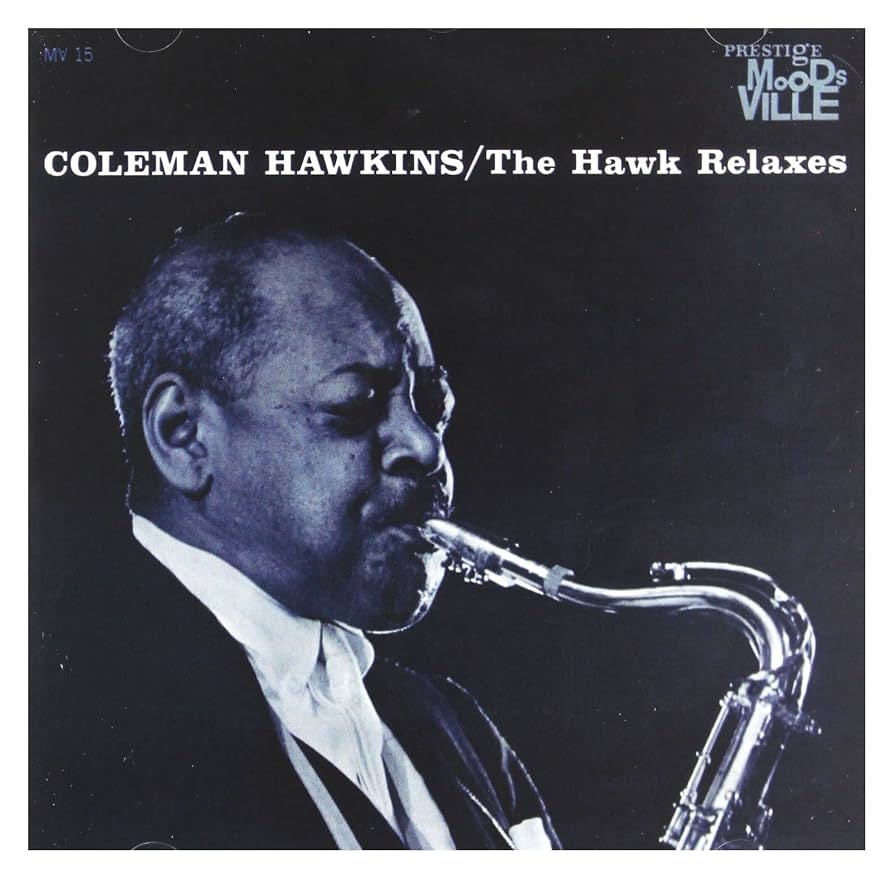
Coleman Hawkins The Hawk Relaxes (2026 Acoustic Sounds Series)
-
Regular price
-
$60.00 SGD
-
Regular price
-
-
Sale price
-
$60.00 SGD
- Unit price
-
per
Couldn't load pickup availability
About
— Reissued as part of the Moodsville Acoustic Sounds Series.
— Pressed on 180g heavyweight vinyl.
— All-analog mastering from the original tapes.
— Housed in tip-on jacket.
—
Originally released in 1961 this newly remastered edition of tenor sax player Coleman Hawkins’ The Hawk Relaxes is released as part of the new Moodsville Series. Featuring Ronnell Bright (piano), Kenny Burrell (guitar), Ron Carter (bass), and Andrew Cyrille (drums) the album is regarded as one of the best albums from Hawkins’ latter period. This new edition is presented on 180-gram vinyl pressed at QRP with all-analog mastering from the original tapes and housed in a Tip-On Jacket. — (via Label)
—
It is said that one grows wiser and mellower with age, as proven by this recording from Coleman Hawkins that is a successful follow-up to his previous Moodsville album At Ease. There is a difference, as Kenny Burrell joins the legendary tenor saxophonist in this quintet setting, with no threat of upstaging or even a hint of any real showcasing of the guitarist's then developing laid-back side. Underrated Ronnell Bright is on the piano, and also proves a veritable equal to Hawkins even more than Burrell. But it is the burgeoning talent of bassist Ron Carter and drummer Andrew Cyrille who mark their territory, not as the maverick individualists they would become, but as supple performers who understand the strength of Hawkins from a modest standpoint.
This quintet — as unique as any Hawkins ever fronted — speaks to his open mindedness, but more so to his innate ability in adapting musicians to his situational hitting. The Hawk Relaxes is one of his best latter period efforts. — (via AllMusic)
—
Coleman Hawkins had every right to rest on his laurels by the time of this 1961 recording. But The Hawk Relaxes finds the father of the tenor saxophone—aka Hawk or Bean—doing anything but clinging to his perch. He may no longer be soaring in search of prey but he's gliding on buoyant and vital air-streams, performing to near-perfection an all-ballad program that rewards the attentive listener at each turn.
When the history of the tenor saxophone was being written primarily by two artists—Hawkins and Lester Young—every tenor player either had memorized Hawkins' solo on the 1939 recording of "Body and Soul" or was carrying in his horn case a faithfully copied transcription. (Down Beat Magazine recently reported Bill Clinton as relating to Wynton Marsalis and a Jazz at Lincoln Center audience that of all the versions of the tune stored in his iPod, none approached the definitive version by Hawkins.)
Perhaps an unfortunate consequence of that seminal recording is that it's led to an almost exclusive emphasis on Hawkins as the prototypal "harmonic" or "vertical" player, and Lester Young as the exemplary "melodist" or "horizontal" music-maker. A useful distinction, but one that has frequently given rise to a view of Hawkins as little more than a creator of arpeggios based on a song's chord changes.
But there's more—considerably more. To begin with, his tone isn't simply "pretty." Nor is it burdened by heaviness and grease, breathiness and spit, exaggerated vibratos and gratuitous effects. It's a non- manufactured sound, as natural and spontaneous as it is virile, warm-hearted and bold. Even on ballads, the Hawk talks, dramatically punctuating the poetry with near-vocal articulations, especially as he moves up the register of the horn. — (via All About Jazz)
↓
Label: Craft Recordings / Prestige
Format: Vinyl, LP, Album, Reissue, Remastered, Stereo
Reissued: 2026 / Originally Released: 1961
Genre: Jazz
Style: Bop, Hard Bop
File under: Audiophile Jazz
⦿
Share
- Regular price
- $60.00 SGD
- Regular price
-
- Sale price
- $60.00 SGD
- Unit price
- per
Couldn't load pickup availability
About
— Reissued as part of the Moodsville Acoustic Sounds Series.
— Pressed on 180g heavyweight vinyl.
— All-analog mastering from the original tapes.
— Housed in tip-on jacket.
—
Originally released in 1961 this newly remastered edition of tenor sax player Coleman Hawkins’ The Hawk Relaxes is released as part of the new Moodsville Series. Featuring Ronnell Bright (piano), Kenny Burrell (guitar), Ron Carter (bass), and Andrew Cyrille (drums) the album is regarded as one of the best albums from Hawkins’ latter period. This new edition is presented on 180-gram vinyl pressed at QRP with all-analog mastering from the original tapes and housed in a Tip-On Jacket. — (via Label)
—
It is said that one grows wiser and mellower with age, as proven by this recording from Coleman Hawkins that is a successful follow-up to his previous Moodsville album At Ease. There is a difference, as Kenny Burrell joins the legendary tenor saxophonist in this quintet setting, with no threat of upstaging or even a hint of any real showcasing of the guitarist's then developing laid-back side. Underrated Ronnell Bright is on the piano, and also proves a veritable equal to Hawkins even more than Burrell. But it is the burgeoning talent of bassist Ron Carter and drummer Andrew Cyrille who mark their territory, not as the maverick individualists they would become, but as supple performers who understand the strength of Hawkins from a modest standpoint.
This quintet — as unique as any Hawkins ever fronted — speaks to his open mindedness, but more so to his innate ability in adapting musicians to his situational hitting. The Hawk Relaxes is one of his best latter period efforts. — (via AllMusic)
—
Coleman Hawkins had every right to rest on his laurels by the time of this 1961 recording. But The Hawk Relaxes finds the father of the tenor saxophone—aka Hawk or Bean—doing anything but clinging to his perch. He may no longer be soaring in search of prey but he's gliding on buoyant and vital air-streams, performing to near-perfection an all-ballad program that rewards the attentive listener at each turn.
When the history of the tenor saxophone was being written primarily by two artists—Hawkins and Lester Young—every tenor player either had memorized Hawkins' solo on the 1939 recording of "Body and Soul" or was carrying in his horn case a faithfully copied transcription. (Down Beat Magazine recently reported Bill Clinton as relating to Wynton Marsalis and a Jazz at Lincoln Center audience that of all the versions of the tune stored in his iPod, none approached the definitive version by Hawkins.)
Perhaps an unfortunate consequence of that seminal recording is that it's led to an almost exclusive emphasis on Hawkins as the prototypal "harmonic" or "vertical" player, and Lester Young as the exemplary "melodist" or "horizontal" music-maker. A useful distinction, but one that has frequently given rise to a view of Hawkins as little more than a creator of arpeggios based on a song's chord changes.
But there's more—considerably more. To begin with, his tone isn't simply "pretty." Nor is it burdened by heaviness and grease, breathiness and spit, exaggerated vibratos and gratuitous effects. It's a non- manufactured sound, as natural and spontaneous as it is virile, warm-hearted and bold. Even on ballads, the Hawk talks, dramatically punctuating the poetry with near-vocal articulations, especially as he moves up the register of the horn. — (via All About Jazz)
↓
Label: Craft Recordings / Prestige
Format: Vinyl, LP, Album, Reissue, Remastered, Stereo
Reissued: 2026 / Originally Released: 1961
Genre: Jazz
Style: Bop, Hard Bop
File under: Audiophile Jazz
⦿
Share
- Choosing a selection results in a full page refresh.