


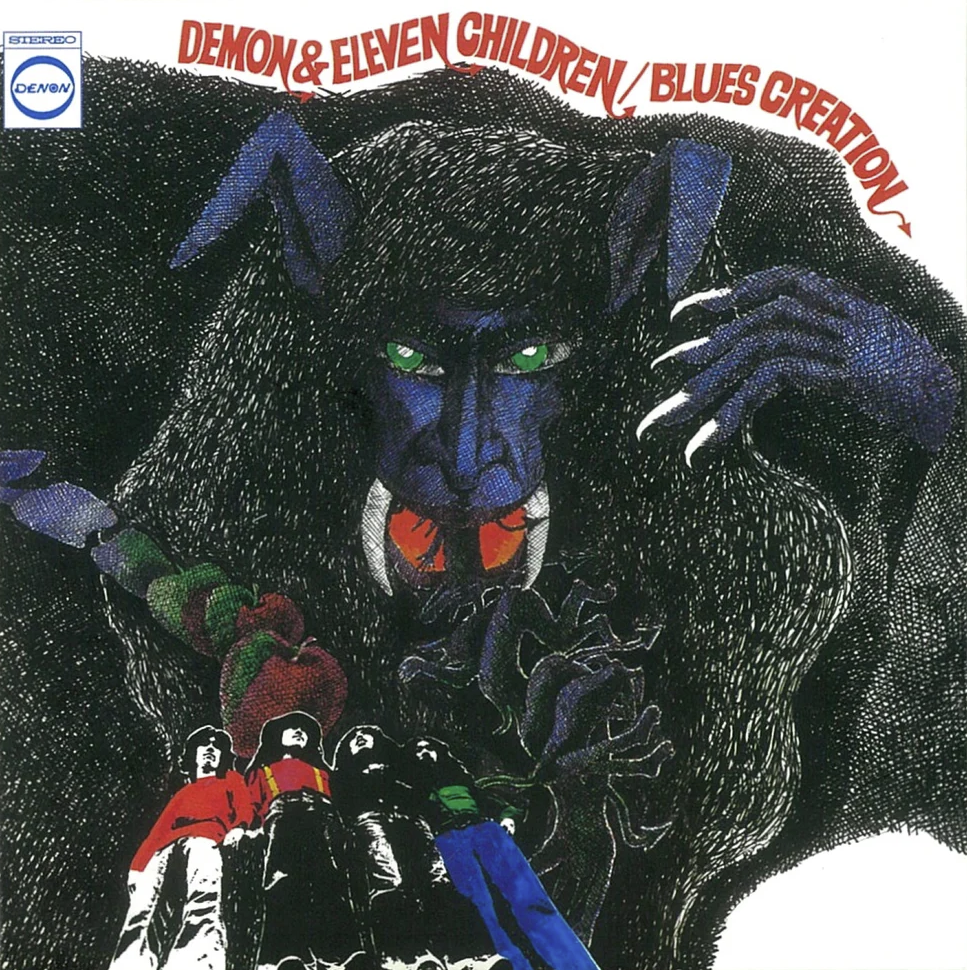
Blues Creation Demon & Eleven Children (2025 Blue Vinyl Edition)
-
Regular price
-
$70.00 SGD
-
Regular price
-
-
Sale price
-
$70.00 SGD
- Unit price
-
per
Couldn't load pickup availability
About
— The Analog Vault // Essential Listening —
Blazing with raw energy and searing guitar riffs, the second album from Blues Creation—the legendary rock band led by guitarist Kazuo Takeda—is a cornerstone of Japan’s hard rock legacy.
Drawing heavy inspiration from the likes of Black Sabbath and Led Zeppelin, this record delivers a powerful, riff-driven sound that helped shape the dawn of Japanese hard rock. What sets it apart is its hypnotic blend of British-style heavy rock with vocals sung in English tinged with a distinctly Japanese flavor—creating a one-of-a-kind psychedelic atmosphere that continues to mesmerize rock enthusiasts across the globe. — (via Light in the Attic)
—
Japan's Blues Creation was formed by guitarists Kazuo Takeda, Koh Eiryu and singer Fumio Nunoya, in early 1969, after the dissolution of their Group Sounds outfit The Bickies. Highly influenced by Cream and The Yardbirds, Takeda joined forces with school friends Takayuki Noji, Shinichi Tashiro, and lead singer Fumio Nunoya. Formerly vocalist with Taboo, a heavy band led by future Happy End guitarist Eiichi Otaki, Nunoya was also searching for an even heavier sound, and the results of the new American-influenced experiment were released in October 1969, as Blues Creation. Singer Fumio Nunoya soon found himself edged out of artistic decisions by the supremely confident Takeda, and thereafter left to form his own band, Dew.
While searching around throughout 1970 for a new singer, guitarist Takeda heard the new, even more strung-out music of Led Zeppelin, Black Sabbath, Eric Clapton's solo LP Clapton, and Leslie West's Mountain, and decided he should take the opportunity to start again from scratch. Takeda enlisted bassist Masashi Saeki and drummer Akiyoshi Higuchi for the new line-up, and eschewed the previous cover's style in favor of his own compositions.
With the new Blues Creation fronted by singer Hiromi Osawa, Kazuo Takeda recorded what has come to be regarded as his masterpiece in the form of Demon & Eleven Children, originally released in 1971 on Denon. This album was recorded at the Japan Folk Jamboree, and is a full-on gem of a record, but Takeda was now widely-known as a true Japanese guitar hero, and - as ever - had set his sights higher and higher. He split Blues Creation the following year, leaving for London in late 1972. This sludge-y slab of big, loud, brain-busting heaviness sits at #17 on Julian Cope's Japrocksampler top 50 list. — (via Forced Exposure)
—
Blues Creation’s seminal album, Demon & Eleven Children, stands as a landmark of Japanese rock history, pioneering the proto-metal genre from the East. Released on August 25, 1971 by Denon, this album marks Blues Creation’s first full-length venture into original songwriting and showcases the explosive creative energy of guitarist and bandleader Kazuo Takeda.
Featuring a transformed lineup—including Hiromi Osawa on vocals, Masashi Saeki on bass, and Masayuki Higuchi on drums—the band evolved from their roots in authentic Chicago blues to forge a heavier, more blues-rock style. Takeda’s songwriting and guitar work drew inspiration from British and American acts such as Black Sabbath, Deep Purple, and Led Zeppelin, yet imparted a distinctly Japanese voice that laid the foundation for a new era in rock.
Demon & Eleven Children erupts with "Atomic Bombs Away," opening with a doomsday blast and monumental riffs. Throughout the album, listeners encounter electrifying power chords in tracks like the epic title piece, "Demon & Eleven Children," and diverse excursions into bluesy and jazz-tinged territory with "Mississippi Mountain Blues" and "Sorrow." The record’s broad musical palette and intensity have earned it "legendary status," with critics lauding it as a proto-metal masterpiece whose only limitation in achieving international superstardom was geographical isolation.
Critics and fans alike have highlighted Takeda’s virtuosic guitar work and Osawa’s evocative vocals. The album's legacy endures: celebrated as one of the most important contributions to Japanese rock, it is revered among collectors and has been featured in Julian Cope’s definitive "Japrocksampler" as a top classic of the genre. — (via Soundohm)
↓
Label: Nippon Columbia
Series: J-Digs
Format: Vinyl, LP, Album, Limited Edition, Reissue, Clear Deep Blue
Country: Japan
Reissued: 2025 / Original: 1971
Genre: Rock
Style: Hard Rock, Psychedelic Rock, Blues Rock, Japanese
File under: Japanese Folk/Rock
⦿
Share
- Regular price
- $70.00 SGD
- Regular price
-
- Sale price
- $70.00 SGD
- Unit price
- per
Couldn't load pickup availability
About
— The Analog Vault // Essential Listening —
Blazing with raw energy and searing guitar riffs, the second album from Blues Creation—the legendary rock band led by guitarist Kazuo Takeda—is a cornerstone of Japan’s hard rock legacy.
Drawing heavy inspiration from the likes of Black Sabbath and Led Zeppelin, this record delivers a powerful, riff-driven sound that helped shape the dawn of Japanese hard rock. What sets it apart is its hypnotic blend of British-style heavy rock with vocals sung in English tinged with a distinctly Japanese flavor—creating a one-of-a-kind psychedelic atmosphere that continues to mesmerize rock enthusiasts across the globe. — (via Light in the Attic)
—
Japan's Blues Creation was formed by guitarists Kazuo Takeda, Koh Eiryu and singer Fumio Nunoya, in early 1969, after the dissolution of their Group Sounds outfit The Bickies. Highly influenced by Cream and The Yardbirds, Takeda joined forces with school friends Takayuki Noji, Shinichi Tashiro, and lead singer Fumio Nunoya. Formerly vocalist with Taboo, a heavy band led by future Happy End guitarist Eiichi Otaki, Nunoya was also searching for an even heavier sound, and the results of the new American-influenced experiment were released in October 1969, as Blues Creation. Singer Fumio Nunoya soon found himself edged out of artistic decisions by the supremely confident Takeda, and thereafter left to form his own band, Dew.
While searching around throughout 1970 for a new singer, guitarist Takeda heard the new, even more strung-out music of Led Zeppelin, Black Sabbath, Eric Clapton's solo LP Clapton, and Leslie West's Mountain, and decided he should take the opportunity to start again from scratch. Takeda enlisted bassist Masashi Saeki and drummer Akiyoshi Higuchi for the new line-up, and eschewed the previous cover's style in favor of his own compositions.
With the new Blues Creation fronted by singer Hiromi Osawa, Kazuo Takeda recorded what has come to be regarded as his masterpiece in the form of Demon & Eleven Children, originally released in 1971 on Denon. This album was recorded at the Japan Folk Jamboree, and is a full-on gem of a record, but Takeda was now widely-known as a true Japanese guitar hero, and - as ever - had set his sights higher and higher. He split Blues Creation the following year, leaving for London in late 1972. This sludge-y slab of big, loud, brain-busting heaviness sits at #17 on Julian Cope's Japrocksampler top 50 list. — (via Forced Exposure)
—
Blues Creation’s seminal album, Demon & Eleven Children, stands as a landmark of Japanese rock history, pioneering the proto-metal genre from the East. Released on August 25, 1971 by Denon, this album marks Blues Creation’s first full-length venture into original songwriting and showcases the explosive creative energy of guitarist and bandleader Kazuo Takeda.
Featuring a transformed lineup—including Hiromi Osawa on vocals, Masashi Saeki on bass, and Masayuki Higuchi on drums—the band evolved from their roots in authentic Chicago blues to forge a heavier, more blues-rock style. Takeda’s songwriting and guitar work drew inspiration from British and American acts such as Black Sabbath, Deep Purple, and Led Zeppelin, yet imparted a distinctly Japanese voice that laid the foundation for a new era in rock.
Demon & Eleven Children erupts with "Atomic Bombs Away," opening with a doomsday blast and monumental riffs. Throughout the album, listeners encounter electrifying power chords in tracks like the epic title piece, "Demon & Eleven Children," and diverse excursions into bluesy and jazz-tinged territory with "Mississippi Mountain Blues" and "Sorrow." The record’s broad musical palette and intensity have earned it "legendary status," with critics lauding it as a proto-metal masterpiece whose only limitation in achieving international superstardom was geographical isolation.
Critics and fans alike have highlighted Takeda’s virtuosic guitar work and Osawa’s evocative vocals. The album's legacy endures: celebrated as one of the most important contributions to Japanese rock, it is revered among collectors and has been featured in Julian Cope’s definitive "Japrocksampler" as a top classic of the genre. — (via Soundohm)
↓
Label: Nippon Columbia
Series: J-Digs
Format: Vinyl, LP, Album, Limited Edition, Reissue, Clear Deep Blue
Country: Japan
Reissued: 2025 / Original: 1971
Genre: Rock
Style: Hard Rock, Psychedelic Rock, Blues Rock, Japanese
File under: Japanese Folk/Rock
⦿
Share
- Choosing a selection results in a full page refresh.