


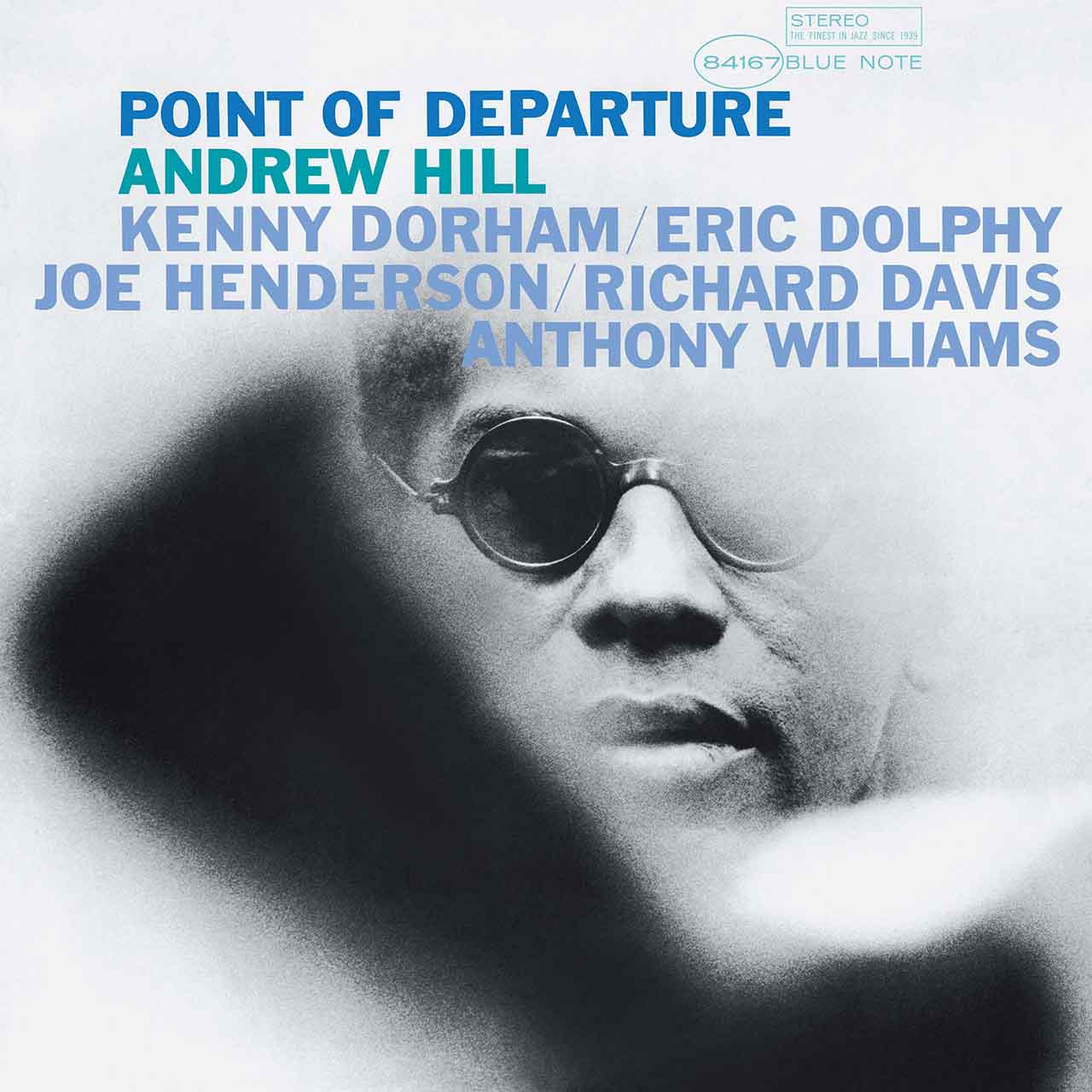
Andrew Hill Point Of Departure (Classic Vinyl Series)
-
Regular price
-
$48.00 SGD
-
Regular price
-
-
Sale price
-
$48.00 SGD
- Unit price
-
per
Couldn't load pickup availability
About
— The Analog Vault // Essential Listening —
Pianist and composer Andrew Hill is perhaps known more for this album than any other in his catalog - and with good reason. Hill's complex compositions straddled many lines in the early to mid-1960s and crossed over many. Point of Departure, with its all-star lineup (even then), took jazz and wrote a new book on it, excluding nothing.
With Eric Dolphy and Joe Henderson on saxophones (Dolphy also played clarinet, bass clarinet, and flute), Richard Davis on bass, Tony Williams on drums, and Kenny Dorham on trumpet, this was a cast created for a jazz fire dance. From the opening moments of "Refuge," with its complex minor mode intro that moves headlong via Hill's large, open chords that flat sevenths, ninths, and even 11ths in their striding to move through the mode, into a wellspring of angular hard bop and minor-key blues. Hill's solo is first and it cooks along in the upper middle register, almost all right hand ministrations, creating with his left a virtual counterpoint for Davis and a skittering wash of notes for Williams. The horn solos in are all from the hard bop book, but Dolphy cuts his close to the bone with an edgy tone.
"New Monastery," which some mistake for an avant-garde tune, is actually a rewrite of bop minimalism extended by a diminished minor mode and an intervallic sequence that, while clipped, moves very quickly. Dorham solos to connect the dots of the knotty frontline melody and, in his wake, leaves the space open for Dolphy, who blows edgy, blue, and true into the center, as Hill jumps to create a maelstrom by vamping with augmented and suspended chords. Hill chills it out with gorgeous legato phrasing and a left-hand ostinato that cuts through the murk in the harmony. When Henderson takes his break, he just glides into the chromatically elegant space created by Hill, and it's suddenly a new tune. This album is full of moments like this. In Hill's compositional world, everything is up for grabs. It just has to be taken a piece at a time, and not by leaving your fingerprints all over everything.
In "Dedication," where he takes the piano solo further out melodically than on the rest of the album combined, he does so gradually. You cannot remember his starting point, only that there has been a transformation. This is a stellar date, essential for any representative jazz collection, and a record that, in the 21st century, still points the way to the future for jazz. — (via AllMusic)
—
Point of Departure is widely considered Andrew Hill’s milestone album, a mesmerising show of craftsmanship and inventiveness that has no other real comparison in jazz. But it’s also important not to take the album in isolation, as it comes in the middle of a whirlwind of activity after Hill had relocated to New York at the start of the 1960s.
Hill was playing with tenorman Joe Henderson and trumpeter Kenny Dorham in Dorham’s quintet. Henderson brought Hill to the recording session for his album Our Thing, and as soon as Blue Note co-founder Alfred Lion heard Hill, it was like a light went on. Lion considered Hill a paradigm shift in the same way as pianist Theolonious Monk, and set about recording as much of Hill’s music as possible. Black Fire was Hill’s first recording date for Blue Note in November of 1963, quickly followed by “Smoke Stack” the next month, then Judgement! in January, Point of Departure in March and Andrew!!! in June 1964. By any count, it’s a superlative five album run in only eight months, and speaks to just what a fertile compositional mind Hill possessed.
Much is made as to where Andrew Hill discovered his unique compositional voice. Some consider his early tutelage from German avant-garde composer Paul Hindemith as the leading factor, others cite his experience playing with Rahsaan Roland Kirk on his Domino album in 1962. It could also have been a response to the groundbreaking strides being made in the avant-garde at the time by free jazz innovators like Ornette Coleman and Cecil Taylor. It’s surely a combination of these factors that contributed to Hill’s personal development and his visionary contribution to hard bop’s fragmentation. But once inside Hill’s Escher-like chord changes and interweaving melodies, their origin is rather a moot point. The music has simply arrived, and all one can do is marvel as it strives to unmoor the foundations of hard bop from the inside.
The ensemble on this album is an unbeatable collection of players, but as is typical with many jazz recording sessions, the group could have been different. Hill had caught avant-garde multi-instrumentalist Eric Dolphy playing with Charles Mingus at the Five Spot Café, and the two had gotten along well. Hill floated the idea of a session with Dolphy to Blue Note and they were on board. At first Charles Lloyd was going to play tenor, but when he couldn’t make it, Joe Henderson stepped in. Hill already knew Kenny Dorham was able to play exceptionally, anywhere. Bassist Richard Davis was “the greatest bass player in existence” according to Hill – the anchor to his mazey compositions and also the only other musician to appear on all five album sessions. A teenage Tony Williams had just come to town and started playing with Miles Davis. All of a sudden, a nucleus for the band had formed, so they made two rehearsals and then went on to do the session at Van Gelder’s studio.
While the group were all in exceptional form, and brought their A game to Hill’s challenging compositions, it’s Dolphy’s inclusion that really sets this album apart. Hill considered Dolphy to have “already developed his individuality,” recognising the unique voice he brought to the album. It was also Dolphy’s last US recording date, coming just after his masterpiece Out To Lunch!, and before he moved to Europe, where he would unfortunately pass away just three months later. In contrast, this album also marks the appearance of a teenage Tony Williams at the start of his legendary career. This tension between endings and beginnings places further weight on the album as a historical document.
Looking back on the impact of Point of Departure, Hill said to Jazz Weekly in 1999 that “a lot of people say that [the music was fresh and explorative], and I’m grateful they think that, but that was just the level that the music had gotten to in the 1960s. It wasn’t an isolated, academic situation because there was a synergy with the jazz audiences at that time. There were no limitations.”
Point of Departure might be a classic of mid-1960s jazz, but it still sounds light years ahead today, and continues to reward repeat listens. Hill wrote jazz like no one else, and after diving deep into his angular chord constructions and labyrinthine repertoire, listeners might find other jazz albums clichéd by comparison. But the album is not just a collection of compositions, it’s also an expression of sociality – that synergy between players and audiences. Hill’s music might put demands on the musician and the listener, but it doesn’t patronise; it seeks out new expressions instead of repeating old tropes. As such, “Point of Departure” is in a zone all of its own – for players and listeners alike. — (via Everything Jazz)
—
In Andrew Hill, Alfred Lion believed he had found another pianist and composer who had as unique and important a voice as Thelonious Monk. Hill debuted on Blue Note in 1963 with a staggering burst of creativity that produced four classic albums—Black Fire, Smoke Stack, Judgment!, and his masterpiece Point of Departure—over a period of just five months.
Recorded in March 1964, Point of Departure expanded Hill’s palette with a 6-piece ensemble of diverse players that included the remarkable frontline of Eric Dolphy on alto saxophone, bass clarinet, and flute, Joe Henderson on tenor saxophone, and Kenny Dorham on trumpet, along with Richard Davis on bass and Tony Williams on drums. The robust sextet delivered thrilling performances of Hill’s extraordinary compositions including “Refuge,” “New Monastery,” “Flight 19,” and “Dedication.” - Blue Note
↓
Label: Blue Note Records
Series: Blue Note Classic Vinyl Series
Format: Vinyl, LP, Album, Reissue, Stereo, 180 g
Reissued: 2022 / Original: 1965
Genre: Jazz
Style: Post Bop, Avant-garde Jazz
File under: TAV Essential Listening
File under: Jazz // Blue Note Records
⦿
Share
- Regular price
- $48.00 SGD
- Regular price
-
- Sale price
- $48.00 SGD
- Unit price
- per
Couldn't load pickup availability
About
— The Analog Vault // Essential Listening —
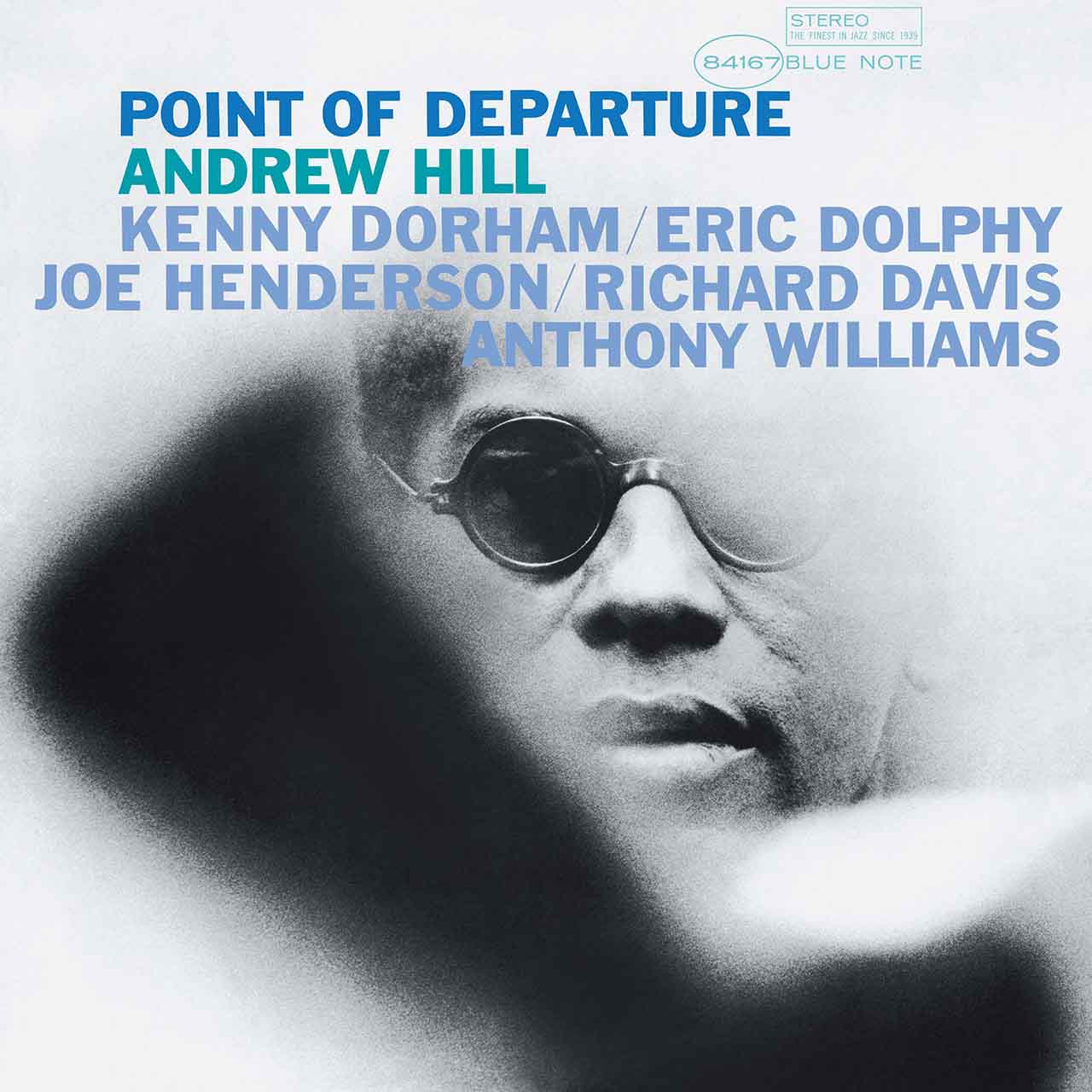
Pianist and composer Andrew Hill is perhaps known more for this album than any other in his catalog - and with good reason. Hill's complex compositions straddled many lines in the early to mid-1960s and crossed over many. Point of Departure, with its all-star lineup (even then), took jazz and wrote a new book on it, excluding nothing.
With Eric Dolphy and Joe Henderson on saxophones (Dolphy also played clarinet, bass clarinet, and flute), Richard Davis on bass, Tony Williams on drums, and Kenny Dorham on trumpet, this was a cast created for a jazz fire dance. From the opening moments of "Refuge," with its complex minor mode intro that moves headlong via Hill's large, open chords that flat sevenths, ninths, and even 11ths in their striding to move through the mode, into a wellspring of angular hard bop and minor-key blues. Hill's solo is first and it cooks along in the upper middle register, almost all right hand ministrations, creating with his left a virtual counterpoint for Davis and a skittering wash of notes for Williams. The horn solos in are all from the hard bop book, but Dolphy cuts his close to the bone with an edgy tone.
"New Monastery," which some mistake for an avant-garde tune, is actually a rewrite of bop minimalism extended by a diminished minor mode and an intervallic sequence that, while clipped, moves very quickly. Dorham solos to connect the dots of the knotty frontline melody and, in his wake, leaves the space open for Dolphy, who blows edgy, blue, and true into the center, as Hill jumps to create a maelstrom by vamping with augmented and suspended chords. Hill chills it out with gorgeous legato phrasing and a left-hand ostinato that cuts through the murk in the harmony. When Henderson takes his break, he just glides into the chromatically elegant space created by Hill, and it's suddenly a new tune. This album is full of moments like this. In Hill's compositional world, everything is up for grabs. It just has to be taken a piece at a time, and not by leaving your fingerprints all over everything.
In "Dedication," where he takes the piano solo further out melodically than on the rest of the album combined, he does so gradually. You cannot remember his starting point, only that there has been a transformation. This is a stellar date, essential for any representative jazz collection, and a record that, in the 21st century, still points the way to the future for jazz. — (via AllMusic)
—
Point of Departure is widely considered Andrew Hill’s milestone album, a mesmerising show of craftsmanship and inventiveness that has no other real comparison in jazz. But it’s also important not to take the album in isolation, as it comes in the middle of a whirlwind of activity after Hill had relocated to New York at the start of the 1960s.
Hill was playing with tenorman Joe Henderson and trumpeter Kenny Dorham in Dorham’s quintet. Henderson brought Hill to the recording session for his album Our Thing, and as soon as Blue Note co-founder Alfred Lion heard Hill, it was like a light went on. Lion considered Hill a paradigm shift in the same way as pianist Theolonious Monk, and set about recording as much of Hill’s music as possible. Black Fire was Hill’s first recording date for Blue Note in November of 1963, quickly followed by “Smoke Stack” the next month, then Judgement! in January, Point of Departure in March and Andrew!!! in June 1964. By any count, it’s a superlative five album run in only eight months, and speaks to just what a fertile compositional mind Hill possessed.
Much is made as to where Andrew Hill discovered his unique compositional voice. Some consider his early tutelage from German avant-garde composer Paul Hindemith as the leading factor, others cite his experience playing with Rahsaan Roland Kirk on his Domino album in 1962. It could also have been a response to the groundbreaking strides being made in the avant-garde at the time by free jazz innovators like Ornette Coleman and Cecil Taylor. It’s surely a combination of these factors that contributed to Hill’s personal development and his visionary contribution to hard bop’s fragmentation. But once inside Hill’s Escher-like chord changes and interweaving melodies, their origin is rather a moot point. The music has simply arrived, and all one can do is marvel as it strives to unmoor the foundations of hard bop from the inside.
The ensemble on this album is an unbeatable collection of players, but as is typical with many jazz recording sessions, the group could have been different. Hill had caught avant-garde multi-instrumentalist Eric Dolphy playing with Charles Mingus at the Five Spot Café, and the two had gotten along well. Hill floated the idea of a session with Dolphy to Blue Note and they were on board. At first Charles Lloyd was going to play tenor, but when he couldn’t make it, Joe Henderson stepped in. Hill already knew Kenny Dorham was able to play exceptionally, anywhere. Bassist Richard Davis was “the greatest bass player in existence” according to Hill – the anchor to his mazey compositions and also the only other musician to appear on all five album sessions. A teenage Tony Williams had just come to town and started playing with Miles Davis. All of a sudden, a nucleus for the band had formed, so they made two rehearsals and then went on to do the session at Van Gelder’s studio.
While the group were all in exceptional form, and brought their A game to Hill’s challenging compositions, it’s Dolphy’s inclusion that really sets this album apart. Hill considered Dolphy to have “already developed his individuality,” recognising the unique voice he brought to the album. It was also Dolphy’s last US recording date, coming just after his masterpiece Out To Lunch!, and before he moved to Europe, where he would unfortunately pass away just three months later. In contrast, this album also marks the appearance of a teenage Tony Williams at the start of his legendary career. This tension between endings and beginnings places further weight on the album as a historical document.
Looking back on the impact of Point of Departure, Hill said to Jazz Weekly in 1999 that “a lot of people say that [the music was fresh and explorative], and I’m grateful they think that, but that was just the level that the music had gotten to in the 1960s. It wasn’t an isolated, academic situation because there was a synergy with the jazz audiences at that time. There were no limitations.”
Point of Departure might be a classic of mid-1960s jazz, but it still sounds light years ahead today, and continues to reward repeat listens. Hill wrote jazz like no one else, and after diving deep into his angular chord constructions and labyrinthine repertoire, listeners might find other jazz albums clichéd by comparison. But the album is not just a collection of compositions, it’s also an expression of sociality – that synergy between players and audiences. Hill’s music might put demands on the musician and the listener, but it doesn’t patronise; it seeks out new expressions instead of repeating old tropes. As such, “Point of Departure” is in a zone all of its own – for players and listeners alike. — (via Everything Jazz)
—
In Andrew Hill, Alfred Lion believed he had found another pianist and composer who had as unique and important a voice as Thelonious Monk. Hill debuted on Blue Note in 1963 with a staggering burst of creativity that produced four classic albums—Black Fire, Smoke Stack, Judgment!, and his masterpiece Point of Departure—over a period of just five months.
Recorded in March 1964, Point of Departure expanded Hill’s palette with a 6-piece ensemble of diverse players that included the remarkable frontline of Eric Dolphy on alto saxophone, bass clarinet, and flute, Joe Henderson on tenor saxophone, and Kenny Dorham on trumpet, along with Richard Davis on bass and Tony Williams on drums. The robust sextet delivered thrilling performances of Hill’s extraordinary compositions including “Refuge,” “New Monastery,” “Flight 19,” and “Dedication.” - Blue Note
↓
Label: Blue Note Records
Series: Blue Note Classic Vinyl Series
Format: Vinyl, LP, Album, Reissue, Stereo, 180 g
Reissued: 2022 / Original: 1965
Genre: Jazz
Style: Post Bop, Avant-garde Jazz
File under: TAV Essential Listening
File under: Jazz // Blue Note Records
⦿
Share
- Choosing a selection results in a full page refresh.